
Virtual staging is transforming New Zealand’s property market by making online listings more appealing and effective. With 93% of homebuyers starting their search online, high-quality, staged photos are critical. Virtual staging digitally adds furniture and décor to empty or cluttered spaces, helping buyers visualise a home’s potential.
Key benefits include:
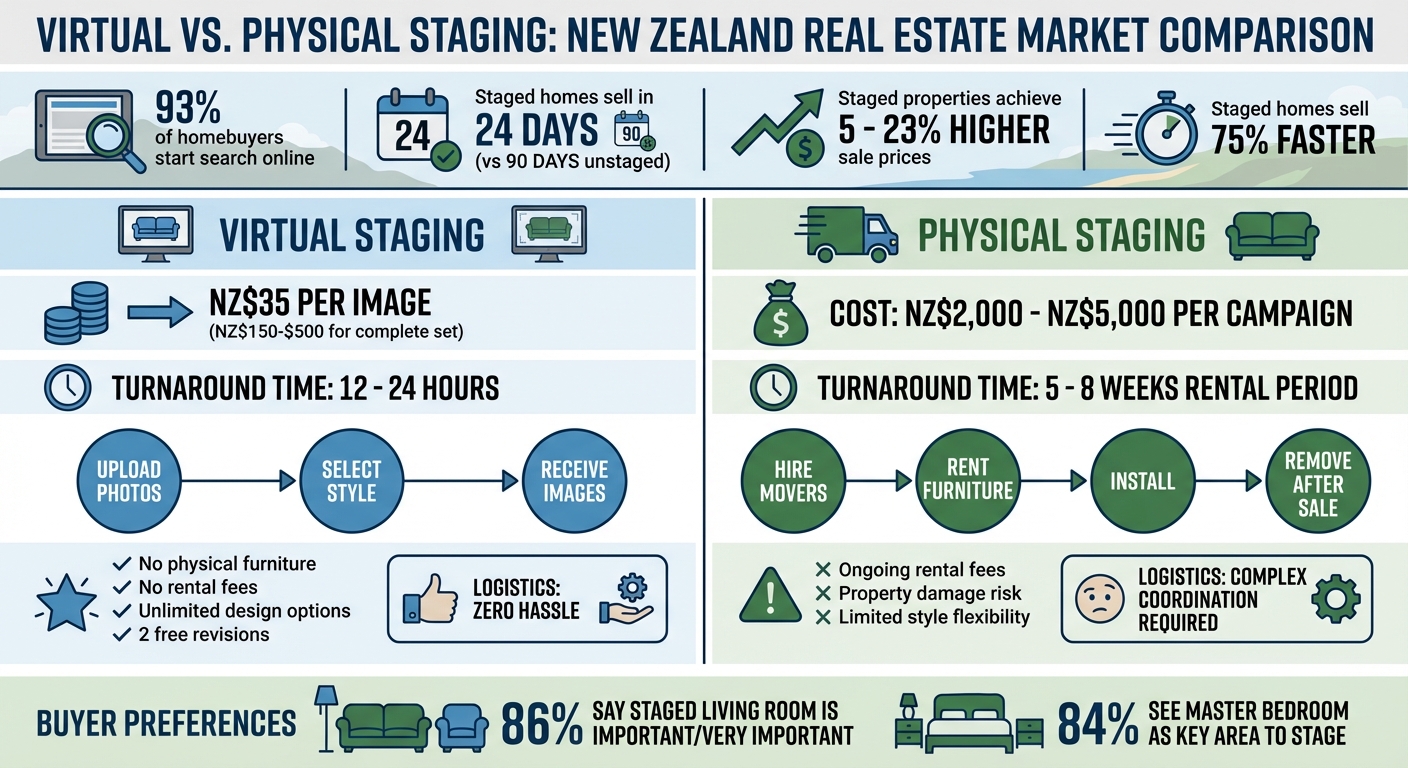
- Faster sales: Staged homes sell in 24 days on average, compared to 90 days for unstaged ones.
- Higher prices: Staged properties can achieve 5% to 23% higher sale prices.
- Cost-effective: At just NZ$35 per image, it’s far cheaper than physical staging, which costs NZ$2,000 to NZ$5,000.
Virtual staging is quick (12–24 hours), affordable, and eliminates the hassle of physical staging. Whether it’s an empty room or a cluttered space, digital transformations make homes more inviting, boosting buyer interest and sales outcomes.
Virtual Staging vs Physical Staging: Cost and Time Comparison for NZ Real Estate
Virtual Home Staging… Before & After!
How Virtual Staging Addresses Common Real Estate Problems
In New Zealand, real estate professionals often grapple with two major challenges: empty rooms that fail to inspire buyers and cluttered spaces that leave them feeling overwhelmed. Both scenarios make it hard for potential buyers to imagine themselves living in the property.
Traditional physical staging can make these issues even trickier. Costs can exceed NZ$2,000, and the process involves complex logistics like hiring movers, renting furniture for 5–8 weeks, and dealing with the risk of property damage.
Virtual staging offers a smarter alternative. For just NZ$35 per image, spaces can be digitally transformed in 24–48 hours. No need for physical furniture, rental agreements, or moving hassles – and the designs can be tailored to match a wide range of buyer preferences.
Helping Buyers See a Property’s Potential
Virtual staging makes it easier for buyers to connect with a property. When scrolling through listings on platforms like Trade Me or realestate.co.nz, buyers form instant impressions based on photos. Staged images highlight a room’s potential – whether it’s a dining area, a home office, or a snug bedroom – helping buyers picture their own lifestyle in the space. This clarity also gives a better sense of the room’s scale and functionality.
What’s more, virtual staging allows agents to adapt styles to suit local preferences. For instance, sleek, modern designs may resonate with Auckland apartment buyers, while a mix of contemporary and classic elements could appeal more to Christchurch homeowners.
Saving Time and Money
Time is a critical factor in New Zealand’s fast-moving property market, especially in Auckland, where well-presented homes often sell quickly. Virtual staging eliminates the delays of planning and installation, allowing properties to be staged and listed within just a few days.
The cost benefits are just as impressive. Traditional staging can require an upfront spend of NZ$2,000 to NZ$5,000, plus ongoing rental fees. In contrast, virtual staging provides a complete set of images for NZ$150 to NZ$500, with no extra charges. This cost predictability makes budgeting simpler for both sellers and agents. These savings in time and money pave the way for the striking before-and-after transformations we’ll explore next.
The Virtual Staging Process at Fast Virtual Staging
Order virtual staging in less than three minutes and get stunning, market-ready images within 12–24 hours. Here’s how we turn your property photos into powerful marketing assets.
Starting with Quality Property Photos
The process begins with high-quality, professional photos. Clear, well-lit, straight-on shots are crucial to showcase room dimensions accurately. These images allow for photo-realistic, properly scaled 3D renders that look both natural and appealing.
Selecting Your Design Style
Pick a design style that resonates with your target audience. Whether it’s Scandinavian simplicity, Modern elegance, or the charm of French Country, the right style can make all the difference in connecting with potential buyers – especially in markets like Auckland, where minimalist aesthetics are often preferred.
Before and After: See the Power of Fast Virtual Staging in Action
These examples show how fast virtual staging can completely transform spaces, making them instantly more appealing to potential buyers.
Example 1: From Cluttered to Captivating – A Living Room Makeover
A cluttered living room with outdated furniture and personal items can hide a property’s potential. Fast Virtual Staging changes this by digitally removing the clutter and replacing it with modern pieces like a sectional sofa, coffee table, area rug, and carefully chosen accents. Importantly, the original architectural features remain untouched, keeping the space authentic. The result? A clean, welcoming room that highlights dimensions and natural light, rather than distracting buyers with personal belongings. It’s no surprise that 86% of buyers say a staged living room is important or very important when deciding on a home.
Virtual staging also works wonders for empty spaces, helping buyers imagine the possibilities.
Example 2: Turning a Blank Bedroom into a Dream Retreat
Empty bedrooms often leave buyers guessing about a room’s scale and purpose. Fast Virtual Staging solves this by transforming blank spaces into luxurious retreats. Picture an upholstered king-sized bed, matching nightstands, modern lighting, and stylish décor – all digitally added to showcase the room’s functionality. This approach not only demonstrates how furniture fits but also ensures the proportions are accurate, avoiding that awkward "floating furniture" look. Considering 84% of buyers see the master bedroom as a key area to stage, this attention to detail makes a big impact.
And for larger homes? Virtual staging scales up effortlessly.
Example 3: Defining Spaces in a Family Home
In larger properties with open layouts, Fast Virtual Staging creates distinct zones by grouping furniture purposefully. For example, in January 2020, Laura Hall used virtual staging to design a cohesive look across a dining room, family room, and dinette. She incorporated touches like floral accents and a TV to tie the spaces together. This approach not only clarified the layout but also enhanced the home’s overall appeal. Staged homes like these sell 75% faster, making it a game-changer for real estate marketing.
These examples highlight how virtual staging can elevate a property’s appeal and speed up sales, making it an essential tool for modern real estate strategies.
sbb-itb-7b8b2a2
Design Principles That Make Virtual Staging Work
Virtual staging uses tried-and-true design principles to turn properties into homes buyers can’t resist. Professional home stager Clare Beer sums it up perfectly:
"Staging isn’t about decorating – it’s about marketing. You’re selling a lifestyle, not just four walls."
These principles don’t just decorate a space; they tell a story. They help buyers see the potential of a property, making it stand out in the New Zealand market.
Using Neutral Colours and Removing Personal Items
Neutral tones and clutter-free spaces create a blank slate that appeals to a wide range of buyers. When a home is filled with bold wallpaper or personal photos, it can be hard for potential buyers to picture themselves living there. Virtual staging eliminates these distractions, replacing them with modern, neutral décor that feels both stylish and inviting.
Fast Virtual Staging offers design styles like Scandinavian and Modern, which keep things clean and neutral while still adding warmth and charm. This approach has been proven to boost interest. For example, an Auckland flat that had been on the market for months saw multiple enquiries and sold quickly after neutral virtual staging was applied. By focusing on universally appealing design, virtual staging increases buyer interest and speeds up sales. But it’s not just about colour – furniture placement plays a big role too.
Arranging Furniture to Maximise Space
How furniture is arranged can make or break a buyer’s impression of a property. Virtual staging uses strategic furniture placement to highlight a home’s best features while making rooms feel spacious and functional. The trick lies in using digital furniture that’s perfectly scaled to the room, ensuring it looks realistic and inviting without overcrowding the space. Small touches like opening curtains, adding mirrors, and using warm lighting further enhance the welcoming atmosphere.
Every room should serve a purpose. Virtual staging can transform an underused storage room into an office or guest bedroom, helping buyers see the potential in every square metre. For open floor plans, grouping furniture to define distinct areas clarifies the layout and makes the space feel more practical. These thoughtful touches not only enhance the home’s appeal but also help it sell faster. And all of this ties into the ultimate goal: making buyers feel at home.
Helping Buyers Picture Themselves Living There
The main objective of virtual staging is to create an emotional connection. Interior designer Michelle Lamb explains:
"It’s about creating a home that feels warm, inviting, and move-in ready, no matter the price bracket."
Details like soft furnishings, cushions, and greenery add warmth without overwhelming the space. First impressions matter, and a well-staged entryway can set the tone for the entire home. Clare Beer compares it to the opening scene of a movie:
"The entryway is like the opening scene of a movie – it sets the stage for what’s to come."
Measuring the Results of Virtual Staging
Virtual staging doesn’t just make a property look good – it delivers results that matter in real estate. By focusing on three key metrics – market time, buyer enquiries, and sale prices – you can see how this tool impacts property marketing across New Zealand.
Selling Properties Faster
In real estate, time is money. Properties that sit on the market for too long rack up holding costs, rates, and missed opportunities. Virtual staging helps reduce market time by making listings more appealing to buyers. When buyers can picture themselves living in a home, they’re more likely to act quickly. Faster sales not only ease financial pressures for sellers but also free up agents to take on new listings.
Attracting More Buyer Interest
A visually striking listing grabs attention. High-quality, virtually staged photos make properties stand out in online searches, increasing buyer interest from the outset. This boost in visibility often leads to more enquiries, creating a sense of urgency and competition among potential buyers. And while it generates interest, virtual staging also plays a role in influencing the final sale price.
Achieving Higher Sale Prices
One of the standout advantages of virtual staging is its ability to push sale prices higher. When buyers can clearly see the potential of a property, they’re often willing to pay more. This makes the investment in virtual staging worthwhile, as it can lead to better outcomes for both sellers and agents.
These metrics highlight how virtual staging not only enhances a property’s appeal but also delivers measurable results, making it a valuable tool in today’s competitive real estate market.
Conclusion
Virtual staging has become a game-changer for real estate professionals across New Zealand, offering a smart way to stand out in a crowded market. By digitally transforming spaces, it allows buyers to see a property’s full potential – helping them imagine what it could feel like to call it home, even before stepping inside.
Not only do properties sell faster, but they also draw in more enquiries on platforms like Trade Me and realestate.co.nz, often leading to higher sale prices. At just NZ$35 per image through Fast Virtual Staging, it’s a budget-friendly alternative to traditional staging, which can cost between NZ$2,000 and NZ$5,000 for a single campaign. With quick 24-hour delivery and two free revisions, agents can kick off marketing efforts without the hassle of organising physical furniture.
Whether you’re listing a vacant property, a deceased estate, or a rental between tenants, virtual staging offers the flexibility to showcase different design styles tailored to your target audience. It’s about creating an emotional connection – helping buyers picture themselves living in the space from the moment they see the listing.
With its proven ability to boost sales speed and prices, virtual staging isn’t just a nice-to-have for real estate agents – it’s a smart, practical tool for thriving in today’s digital-first market. For agents aiming to elevate their listings and achieve better outcomes for their clients, virtual staging is an investment that delivers results.
FAQs
Will virtually staged photos look realistic?
Virtually staged photos, when created with professional software, can look incredibly lifelike. They serve as a powerful tool to help buyers picture the possibilities of a property, making it easier to imagine themselves living there. High-quality staging elevates the space’s appeal and creates a memorable impact.
What photos do I need to supply for virtual staging?
To get the best results from virtual staging, start with high-quality, well-lit photos of the rooms you want staged. Make sure each room is free of clutter and personal items to keep the focus on the space itself. Take photos from consistent angles, ensuring proper framing and lighting. Keeping the camera at a consistent height across all shots adds uniformity, making the final staging look more realistic and visually cohesive.
Can I choose different styles to match my target buyers?
Virtual staging offers a range of design styles that can be tailored to appeal to your target buyers. These styles can be customised to align with specific demographics or property types, making it easier to craft listings that connect with your audience.