
Virtual staging is transforming New Zealand’s property market by helping real estate agents present empty homes as warm, inviting spaces. With over 90% of buyers starting their search online, high-quality visuals are critical. Virtual staging offers a cost-effective alternative to physical staging, with prices starting at just $35 NZD per image and fast 24-hour delivery. Staged homes sell faster, with reductions in time on the market ranging from 33% to 42%, and often achieve higher offers.
Key benefits include:
- Affordable pricing compared to traditional staging ($1,500–$5,000).
- Faster sales: Virtually staged properties sell in 28–60 days, compared to 45–90 days for unstaged homes.
- Customisable designs to attract different buyer groups, like families or remote workers.
Virtual Home Staging… Before & After!
New Zealand Real Estate Challenges and Virtual Staging Solutions
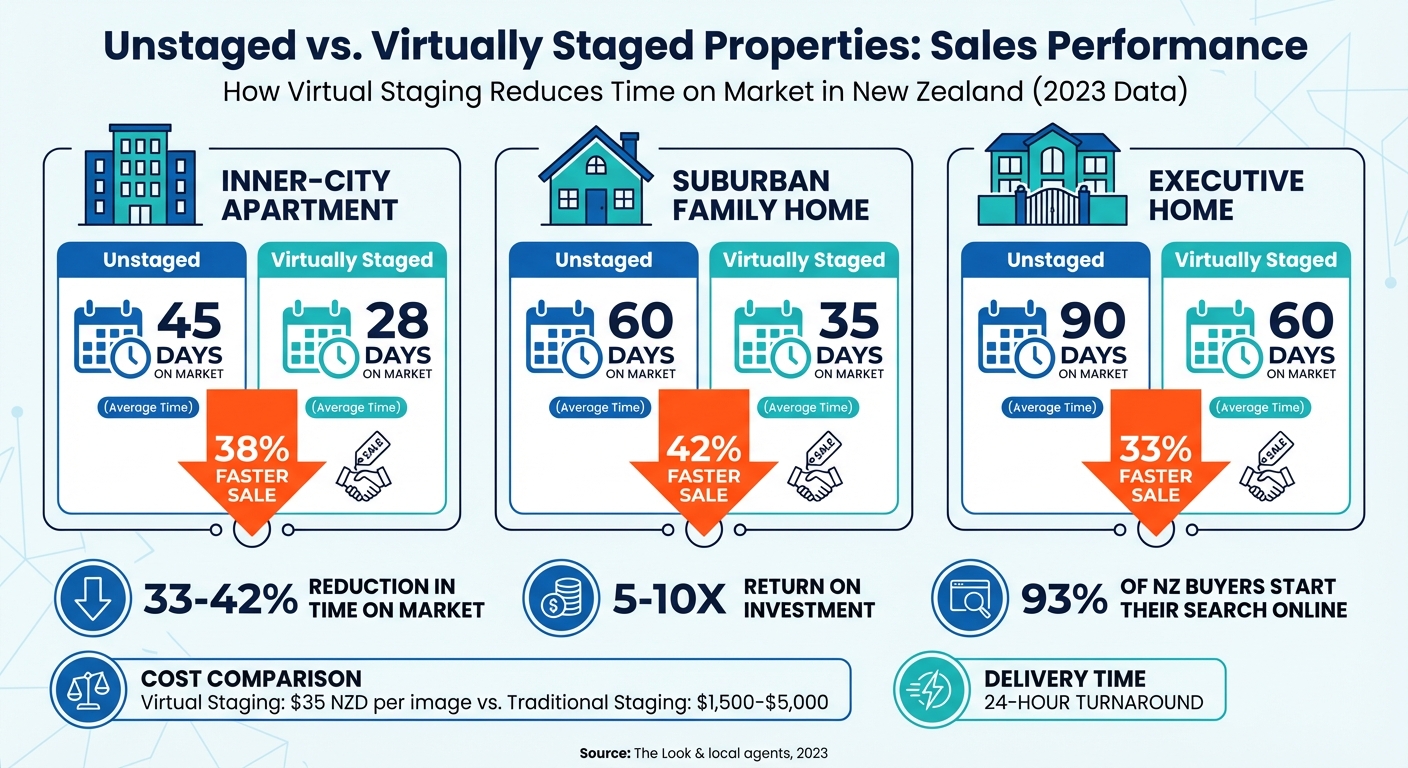
Virtual Staging Impact on Property Sales in New Zealand: Time on Market Comparison
How Vacant and Unstaged Properties Affect Sales
Selling empty properties is a tough gig for New Zealand real estate agents. When potential buyers scroll through listings on platforms like Trade Me, OneRoof, or realestate.co.nz, bare rooms often fail to grab their attention. Without furniture or decor, many struggle to imagine how the space could work for their daily lives.
This lack of visual appeal has a direct impact on sales. In slower markets like Hamilton and Dunedin, unstaged homes face stiff competition from listings that are beautifully presented. According to 2023 data from The Look and local agents, vacant inner-city apartments take an average of 45 days to sell, suburban family homes linger for 60 days, and high-end executive properties can sit unsold for up to 90 days. These extended timelines often lead to price cuts and weaker negotiating power for sellers.
As The Look explains:
Staging helps buyers emotionally connect with a home and see its full potential. That connection is often what turns a showing into a sale.
Without this emotional hook, vacant homes can feel cold and uninspiring. It’s these challenges that make digital solutions like virtual staging so appealing.
Benefits of Virtual Staging for New Zealand Properties
Virtual staging is proving to be a game-changer, especially for tackling the challenges of selling empty homes. By digitally transforming bare rooms into warm, inviting spaces, virtual staging helps buyers picture themselves living there. The benefits are clear: staged properties sell faster. The same 2023 data reveals that staged inner-city apartments sell in just 28 days (down from 45), suburban homes in 35 days (down from 60), and executive properties in 60 days (down from 90).
The advantages don’t stop there. Staged properties typically fetch higher offers and face fewer objections during negotiations, delivering a return on investment of 5 to 10 times.
Virtual staging also offers flexibility that traditional staging can’t match. For example, a single bedroom can be presented as both a nursery and a home office, appealing to a variety of buyers like young families and remote workers. Plus, digital staging eliminates the logistical headaches of physical staging, such as moving furniture, while allowing for multiple design styles to suit different tastes.
Unstaged vs. Virtually Staged Properties: A Comparison
The numbers speak for themselves when comparing unstaged and virtually staged properties. Here’s a breakdown of how staging impacts the time it takes to sell:
| Property Type | Days on Market (Unstaged) | Days on Market (Staged) | Reduction |
|---|---|---|---|
| Inner-city Apartment | 45 | 28 | 38% |
| Suburban Family Home | 60 | 35 | 42% |
| Executive Home | 90 | 60 | 33% |
Data from The Look & local agents, 2023
This data highlights why many agents are now including staging as part of their standard marketing approach rather than treating it as an optional add-on. With over 93% of New Zealand buyers starting their property search online, high-quality listing photos are essential for making that all-important first impression.
Case Studies: Fast Virtual Staging Results in New Zealand
These examples highlight how Fast Virtual Staging has made a difference in property sales across New Zealand.
Auckland Suburban Family Home
A three-bedroom home in suburban Auckland was struggling to catch buyers’ attention due to its cluttered and unappealing presentation. The agent decided to utilise Fast Virtual Staging, choosing a Scandinavian-inspired design. By incorporating clean lines, neutral colours, and cosy details, the previously empty rooms were turned into warm, inviting spaces. The result? The property’s time on the market dropped significantly, from 60 days to just 35 days.
Wellington Inner-City Apartment
In Wellington’s CBD, a one-bedroom apartment was failing to entice potential buyers online. The space felt cold and uninviting in its bare state. To counter this, the agent used virtual staging to add contemporary furniture and creatively reimagined underused areas, like converting a small nook into a functional home office. This change resonated with remote workers and young professionals, leading to a 50% jump in viewings and reducing the time on the market from 45 days to 28 days. The updated visuals also improved the apartment’s online appeal, drawing in more interest.
Christchurch Executive Property
A luxury executive home in Christchurch was being overlooked due to its dated décor, which failed to highlight its high-end features. Fast Virtual Staging stepped in with a minimalist, commercial-style redesign. Sophisticated furniture and a focus on open, aspirational styling brought out the property’s spacious layout and premium details. This modern transformation reduced the time on the market from 90 days to 60 days. By stripping away outdated interiors, the staging allowed buyers to see the true value of the home.
These examples underline how Fast Virtual Staging can quickly reshape property listings, meeting the expectations of New Zealand’s digitally savvy buyers.
sbb-itb-7b8b2a2
Fast Virtual Staging Features and Advantages
Photo-Realistic Renders and Multiple Design Styles
Fast Virtual Staging uses cutting-edge 3D rendering to create digital furniture and décor that look almost indistinguishable from real-life furnishings. These designs are carefully integrated into property photos, offering a polished and cohesive look. With a variety of design styles – such as Scandinavian, Modern, Minimalist, Rustic, and Luxury – agents can customise the staging to suit both the property and its potential buyers. For instance, a cosy suburban family home might benefit from the inviting warmth of Scandinavian design, while a sleek, high-end apartment could be enhanced with minimalist touches. This adaptability not only elevates the visual appeal of listings but also helps properties sell more quickly.
Fast Delivery and Customisation Options
Beyond its design variety, Fast Virtual Staging stands out for its speed and precision. The platform promises delivery within 24 hours and includes two free revisions, ensuring a smooth process for agents working under tight timelines. Additionally, its white-label solution allows photographers and agencies to incorporate virtual staging seamlessly into their own branding, offering a professional and cohesive service to clients.
These features, combined with its efficiency and flexibility, make it an excellent tool for real estate professionals aiming to enhance their market presence.
Affordability and Measurable Results
Fast Virtual Staging is not only efficient but also cost-effective, delivering real results. In New Zealand, the average return on investment for home staging is estimated to be 5–10 times the initial cost. As Lyall Russell from LJ Hooker notes:
More than 90 percent of property journeys start online, and that is where quality pictures capture an audience to stand out from the competition.
Conclusion
Virtual staging breathes life into vacant properties, transforming empty rooms into inviting, liveable spaces. By digitally reimagining these areas, Fast Virtual Staging helps buyers picture their future home, overcoming one of the biggest hurdles in property sales.
The impact is undeniable. With the majority of buyers starting their search online, compelling visuals are no longer optional – they’re essential. Staged properties spend 33–42% less time on the market and generate a return on investment of 5–10×. That means quicker sales, happier clients, and a competitive edge in the market.
Fast Virtual Staging stands out with its quick turnaround, realistic designs, and flexibility, making it a go-to solution for agents across all budgets and timelines. Whether you’re showcasing a cosy suburban home, a sleek city apartment, or a high-end executive property, its designs appeal to a wide range of buyers.
Virtual staging isn’t just a tool – it’s a game-changer. As Jo, a delighted client, shared:
Thank you for the absolutely amazing job – the place looks fabulous. In fact, it’s so good that we’ve sold already!
FAQs
What are the cost and time advantages of virtual staging compared to traditional staging in New Zealand?
Virtual staging is a game-changer when it comes to saving both money and time compared to traditional staging methods. The cost for digitally staged images typically falls between NZ$35 and NZ$200 per image, with some options available for as little as NZ$25–$65. On the other hand, physically staging an entire property can set you back anywhere from NZ$1,500 to NZ$5,000 or more.
The time savings are just as impressive. Virtual staging services usually deliver edited images within 12–48 hours, with many completing the job in just 12–24 hours. In contrast, organising and completing physical staging can take anywhere from 7 to 14 days, sometimes even longer. With costs reduced by 97% and a turnaround time that’s nearly instant, virtual staging stands out as the most efficient way to present properties in New Zealand’s fast-paced real estate market.
What are the key benefits of virtual staging for selling homes in New Zealand?
Virtual staging provides a cost-effective and quick way for Kiwi homeowners to make empty or outdated spaces more attractive to potential buyers. At an average cost of just NZ$35 per image, compared to the thousands typically spent on traditional staging, it’s an affordable option that delivers lifelike, high-quality results in as little as 12 to 48 hours. This combination of speed and affordability is a perfect fit for New Zealand’s competitive property market.
Staged images can generate up to 30% more views and 45% higher engagement on property listings, helping them stand out online and capture more interest. Homes with virtual staging not only sell faster – up to 73% quicker – but often achieve sale prices 5–10% above expectations. On top of these benefits, virtual staging has an environmentally friendly edge, creating minimal waste, and offers tailored designs that reflect Kiwi preferences or appeal to specific buyer demographics.
In short, it’s a smart and efficient way to present properties in their best light while saving both time and money.
How can virtual staging be personalised to attract different types of buyers in New Zealand?
Virtual staging can be adjusted to suit different types of buyers by customising the design, layout, and details to align with their preferences and lifestyles.
For younger buyers, sleek, modern styles like Scandinavian or contemporary designs work well. Compact, multi-purpose furniture can emphasise smart space utilisation. Families might lean towards coastal-inspired décor, featuring larger seating areas, dining tables that can seat six, and child-friendly elements. High-end buyers, including overseas investors, often prefer minimalist aesthetics with premium finishes or even empty layouts that spotlight the floor plan.
Incorporating local touches can make a big difference for Kiwi buyers. Think native timber finishes, Māori-inspired patterns, or outdoor living spaces like patios and decks. Including NZ$ price tags on virtual appliances and sticking to metric measurements ensures the staging feels familiar and relatable. These thoughtful details help buyers picture themselves living in the space, boosting both interest and engagement.