
When selling property in New Zealand, the right camera angles in 3D renders can make a huge difference. Wide-angle shots can make compact spaces feel larger, eye-level views help buyers imagine themselves in the home, and aerial perspectives showcase outdoor areas and scenic surroundings. These techniques are especially valuable in NZ’s competitive housing market, where buyers prioritise natural light, outdoor living, and efficient layouts.
Fast Virtual Staging is a cost-effective, quick option for adding digital furniture to existing photos, priced at just NZ$35 per image with a 24-hour turnaround. It works well for existing properties but is limited by the quality and angles of the original photos.
Standard Rendering Methods, while slower and more expensive (NZ$200–NZ$1,000+ per image), offer unlimited flexibility in angles and lighting, making them ideal for new builds or luxury homes. Both methods help listings stand out online, but choosing the right one depends on your property’s needs and marketing goals.
| Comparison Factor | Fast Virtual Staging | Standard Rendering Methods |
|---|---|---|
| Cost per Image | NZ$35 | NZ$200–NZ$1,000+ |
| Delivery Time | 24–48 hours | 3–14 days |
| Angle Options | Limited to source photo | Unlimited |
| Best Use Case | Existing properties | New builds, luxury homes |
To maximise appeal, plan shots to highlight open layouts, indoor–outdoor flow, and standout features. Use wide-angle views for space, close-ups for details, and aerial shots for context. Tailor your approach to suit the property and its target buyers.
7 Camera Angles You Must Know | CINEMATIC Architectural Render
1. Fast Virtual Staging
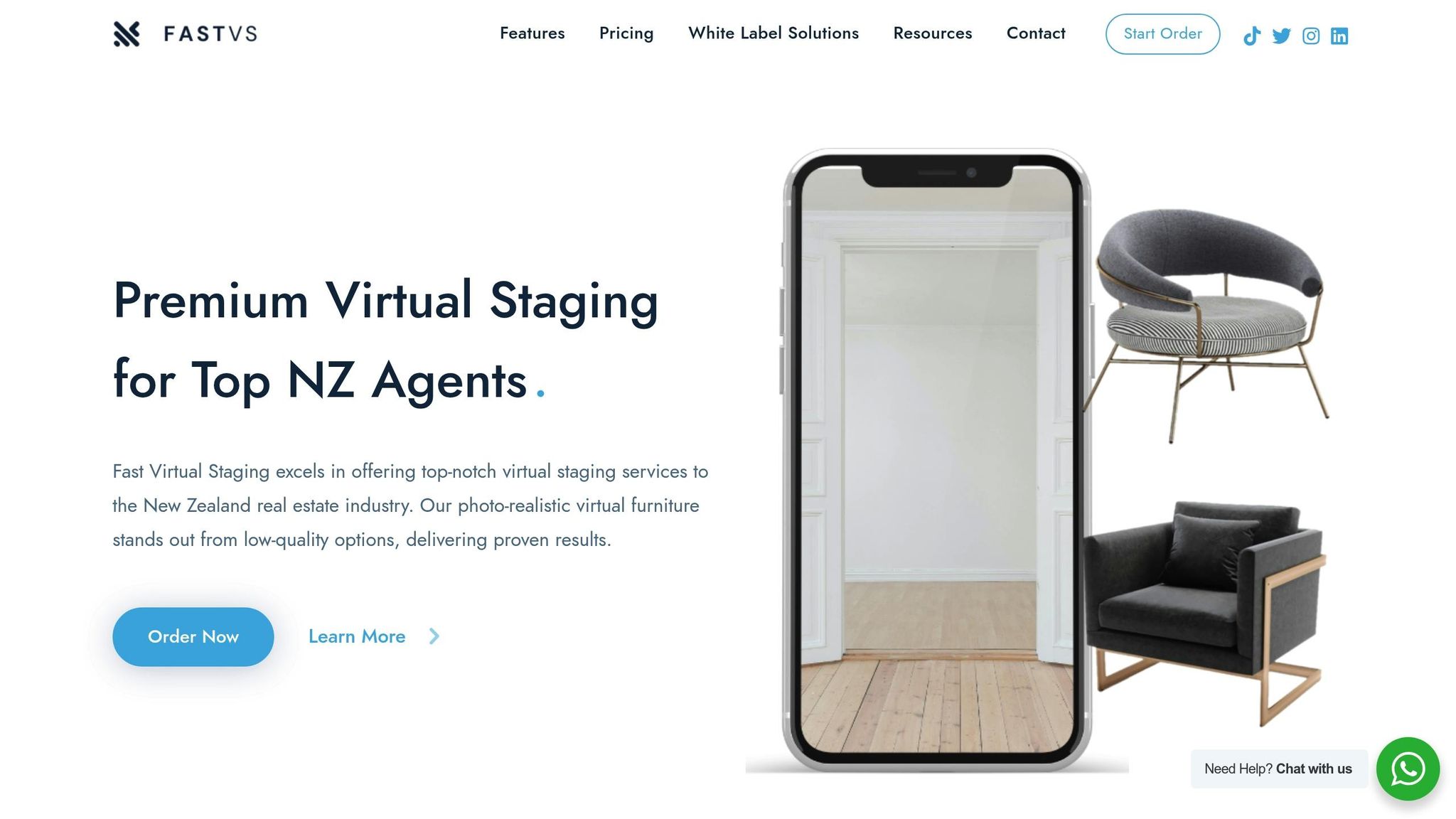
Fast Virtual Staging takes a smart approach to showcasing properties by focusing on camera angles that enhance how buyers perceive space, layout, and potential. It’s not just about adding virtual furniture – it’s about presenting the property in the best possible light.
The platform offers a range of camera angles to highlight key features of a home. For example, wide-angle shots can make Auckland apartments feel more spacious – essential in a city where space is often limited. Eye-level perspectives provide buyers with a natural view, helping them picture themselves moving through the space. For homes with stunning surroundings, aerial views can emphasise the connection between the property and its outdoor setting, which is a big draw for New Zealand buyers who appreciate scenic landscapes and outdoor living.
Corner, angled, and close-up shots add depth to rooms and draw attention to premium finishes or standout details. This variety allows real estate professionals to customise their marketing approach, focusing on what makes each property special. All these angles tie into the platform’s focus on creating realistic, visually appealing staging.
What really sets Fast Virtual Staging apart is its photo-realistic quality. Their skilled 3D artists ensure that textures, lighting, and spatial relationships are seamlessly integrated into the original photos. The result is so convincing that potential buyers feel a stronger connection to the property, which is a huge advantage in New Zealand’s competitive housing market.
"Fast Virtual Staging provides fast, high-quality virtual furniture for real estate listings. I’ve recommended to my industry colleagues and will continue to use their services in the future", says Connor Pocock, Sales Associate at Ray White.
The service also stands out for its quick turnaround times, which are perfectly aligned with the fast-moving nature of New Zealand real estate. Agents can get properties listed quickly without sacrificing quality, giving them a competitive edge.
Budgeting is made straightforward thanks to a transparent pricing model. Real estate professionals can plan their marketing costs with confidence, and white-label partners benefit from extra perks like a 20% discount for Real Estate Photographer Club members.
Fast Virtual Staging’s design flexibility is another big win. Whether you’re promoting a sleek Wellington townhouse or a coastal home in Tauranga, you can choose from styles like Scandinavian, Modern, or French Country to suit the property’s vibe and appeal to the target audience. This ability to match designs to local tastes ensures every property’s unique charm is showcased effectively.
2. Standard Rendering Methods
In the property industry, traditional 3D rendering techniques often rely on carefully chosen camera angles to emphasise a property’s best features. This approach forms the backbone of understanding both the benefits and challenges of standard rendering.
Techniques like wide-angle, corner, and eye-level shots are commonly used to showcase the flow of space, natural lighting, and create an emotional connection with viewers. These methods work well for both interior and exterior scenes. For properties with outdoor spaces – a hallmark of New Zealand’s landscape-focused housing market – aerial views can effectively illustrate how a home integrates with its surroundings.
Today’s advanced 3D software allows for the creation of photo-realistic images that mimic real-world lighting, materials, and textures. However, producing such high-quality renders requires skilled 3D artists who understand how different materials interact with light under various conditions.
Compared to virtual staging services, standard rendering methods tend to have longer production timelines. Typically, these projects take 2–7 business days to complete, and any revisions can extend this timeframe further.
When it comes to costs, high-quality renders range from NZ$200 to NZ$1,000+ per image, with more complex shots – like aerial views or montage-heavy compositions – falling on the higher end of the spectrum.
Standard rendering also provides unique perspectives that traditional photography cannot. For instance, worm’s-eye views can highlight the grandeur of tall buildings, while elevated shots offer a broader context without requiring drone photography.
These methods are tailored for New Zealand’s market, incorporating metric measurements, NZD pricing, and local design preferences. The focus on outdoor living and natural light – key selling points for Kiwi homes – can be effectively captured by selecting the right angles and lighting setups.
However, one major limitation of standard rendering is the inflexibility of post-production changes. Camera angles, lighting, and composition must be finalised early on, as adjustments later can be both time-consuming and expensive. This rigidity underscores why newer alternatives, like Fast Virtual Staging, are gaining traction in today’s fast-moving property market.
sbb-itb-7b8b2a2
Advantages and Disadvantages
Looking at Fast Virtual Staging and standard rendering methods side by side makes it easier to understand how each helps showcase properties. Both have their strengths and drawbacks when it comes to highlighting a property’s features.
Fast Virtual Staging stands out for its speed and affordability. You can get completed renders in just 24–48 hours for around NZ$35 per image. This quick turnaround is a game-changer in New Zealand’s fast-moving property market, where getting a listing up promptly can be the difference between a sale and a missed opportunity. By digitally adding furniture to existing photos, the results often appear as realistic as traditional staging. Many real estate professionals in New Zealand confirm that these images are hard to distinguish from professionally staged photos. However, this method does have its limitations, especially when compared to the flexibility of full 3D rendering.
The main drawback of Fast Virtual Staging lies in its reliance on the original photographs. Since the final renders are tied to these images, agents can’t experiment with creative camera angles, such as high or low perspectives, to highlight unique architectural features. If the source photos are poorly lit or taken from less-than-ideal angles, it can limit how well the property is presented.
On the other hand, standard rendering methods offer unmatched creative freedom. With these techniques, you can choose any camera angle or composition, making it possible to tell a visual story about the property. They’re especially effective for showcasing architectural details and blending the property with New Zealand’s stunning landscapes. Standard rendering also allows full control over lighting, textures, and materials, giving the final images a polished and detailed look.
That said, the biggest downsides of standard rendering are cost and time. Prices range from NZ$200 to NZ$1,000+ per image, and production can take anywhere from 3 to 14 days, depending on the complexity. This method also requires skilled 3D artists, and making changes after the render is complete – like adjusting lighting or camera angles – can be both time-consuming and expensive.
Here’s a quick comparison of the two approaches:
| Comparison Factor | Fast Virtual Staging | Standard Rendering Methods |
|---|---|---|
| Photo-realism | High (depends on photo quality) | Very High (complete control over details) |
| Camera Angle Options | Limited (based on source photo) | Unlimited (any perspective possible) |
| Delivery Speed | 24–48 hours | 3–14 days (varies by complexity) |
| Cost per Image | NZ$35 | NZ$200–NZ$1,000+ |
| Flexibility | Best for existing properties | Perfect for new builds or custom designs |
According to New Zealand agents, listings with Fast Virtual Staging see a 20–30% increase in inquiries, while also cutting staging costs and speeding up the listing process for residential properties. Meanwhile, standard rendering is the go-to choice for new developments and high-end properties. Its ability to showcase unique architectural designs from multiple angles makes it essential for marketing these types of projects effectively.
The choice ultimately depends on the property and your goals. If you’re working on a standard residential listing and need something quick and cost-effective, Fast Virtual Staging is the way to go. But for new builds or luxury properties where maximum visual impact and creative flexibility are key, standard rendering is worth the extra investment.
Final Recommendations
Choose your rendering approach based on your property’s specific needs and the trends shaping the New Zealand market.
For residential properties that need to be listed quickly, Fast Virtual Staging is a practical solution. At just NZ$35 per image, with delivery within 12–24 hours, it’s perfect for situations where time and budget are critical. To get the best results, ensure your original photos showcase the property’s most attractive features. Since Kiwi buyers often prioritise indoor–outdoor flow and spacious living areas, focus on capturing these elements in your photos.
Carefully select camera angles to highlight the property’s strengths. Wide-angle shots can emphasise open-plan layouts, while corner perspectives reveal the seamless flow of space that’s popular in modern New Zealand homes. For exterior shots, eye-level views work particularly well, creating an emotional connection that helps potential buyers picture themselves living there.
For properties that require a more customised and detailed presentation, standard rendering methods offer greater creative flexibility. While these methods are more expensive – ranging from NZ$200 to over NZ$1,000 per image – and take longer (3 to 14 days), they allow you to highlight unique architectural details and showcase the property’s connection to New Zealand’s stunning landscapes. Aerial or bird’s-eye views can be particularly effective in emphasising these aspects, offering a visual narrative that stands apart from the faster, more affordable Fast Virtual Staging option.
Commercial properties, on the other hand, benefit from a mix of wide and elevated perspectives to demonstrate layout and functionality, along with close-ups to highlight premium finishes that justify higher price points. In New Zealand’s commercial market, efficient use of space and natural light are highly valued, so ensure your chosen angles reflect these qualities.
A winning marketing strategy combines a variety of angles. Start with a hero shot at eye level to create emotional appeal, incorporate wide-angle views to showcase space and flow, and finish with close-ups of standout features. For larger properties with expansive outdoor areas, aerial views provide valuable context, appealing to buyers who prioritise lifestyle and location.
Before commissioning renders, plan your shots carefully. Align each angle with the property’s key selling points, and ensure consistency in style while considering local design preferences. Whether you opt for the speed and affordability of Fast Virtual Staging or the creative freedom of standard rendering methods, tailor your approach to highlight what makes your property stand out. Thoughtful planning and attention to detail will reinforce your marketing strategy and help your listing resonate with New Zealand buyers.
FAQs
How does Fast Virtual Staging stand out compared to traditional rendering methods for showcasing property features?
Fast Virtual Staging provides lifelike virtual furniture renders that showcase properties with stunning detail and precision. These renders go beyond typical rendering techniques, offering a polished and professional look that enhances the appeal of any property.
With fast delivery and a variety of design styles, Fast Virtual Staging helps emphasise a property’s standout features while accommodating a wide range of preferences. Whether it’s a sleek city apartment or a charming family home, this service fits perfectly with the unique demands of New Zealand’s real estate market.
How do camera angles in 3D renders impact how buyers view a property?
The way you choose camera angles in 3D renders can significantly influence how potential buyers view a property. The right angles can draw attention to standout features like open layouts, abundant natural light, or high-end finishes, making the space feel more attractive and welcoming.
Take wide-angle shots, for example – they can make rooms look more expansive and airy. On the other hand, low-angle views can bring attention to architectural details or unique design touches. By carefully picking angles that highlight the property’s best qualities, you can craft visuals that captivate buyers and leave a lasting impression.
Why is it important to consider local design preferences when creating property renders in New Zealand?
When creating property renders for the New Zealand market, it’s crucial to align with local design tastes. Elements like preferred colour schemes, furniture aesthetics, and layout choices often differ by region, and these details can greatly influence how attractive a property appears to potential buyers.
New Zealand’s unique lifestyle and environment also play a big role. Prioritising features such as abundant natural light, inviting outdoor areas, and the use of sustainable materials can make a property feel more in tune with local values. By reflecting these preferences in your renders, you’ll not only make the property more visually appealing but also create a stronger connection with buyers, giving it an edge in the market.