
Virtual staging is transforming New Zealand’s real estate market. It helps properties sell faster and for higher prices by digitally furnishing spaces to make them more appealing. With over 90% of buyers starting their search online, standout listing photos are essential. Virtual staging is a cost-effective alternative to physical staging, with services starting at just $35 NZD per image compared to $1,500–$5,000 for traditional methods. It also offers faster turnaround times (as little as 24 hours) and the flexibility to style rooms in different ways to suit buyer preferences.
Key benefits:
- Faster sales: Staged homes sell 30–50% faster and often for 5–10% higher prices.
- Affordable: Only $35 NZD per image versus thousands for physical staging.
- Convenient: No need for physical furniture or logistics; everything is done digitally.
- Customisable: Style rooms to match buyer demographics, from modern apartments to family homes.
Whether you’re selling a compact Auckland apartment, a suburban Christchurch home, or a new build, virtual staging can help buyers visualise the potential of a property and encourage quicker decisions. It’s a smart tool for agents and vendors looking to stand out in a competitive market.
Benefits of Virtual Staging for New Zealand Properties
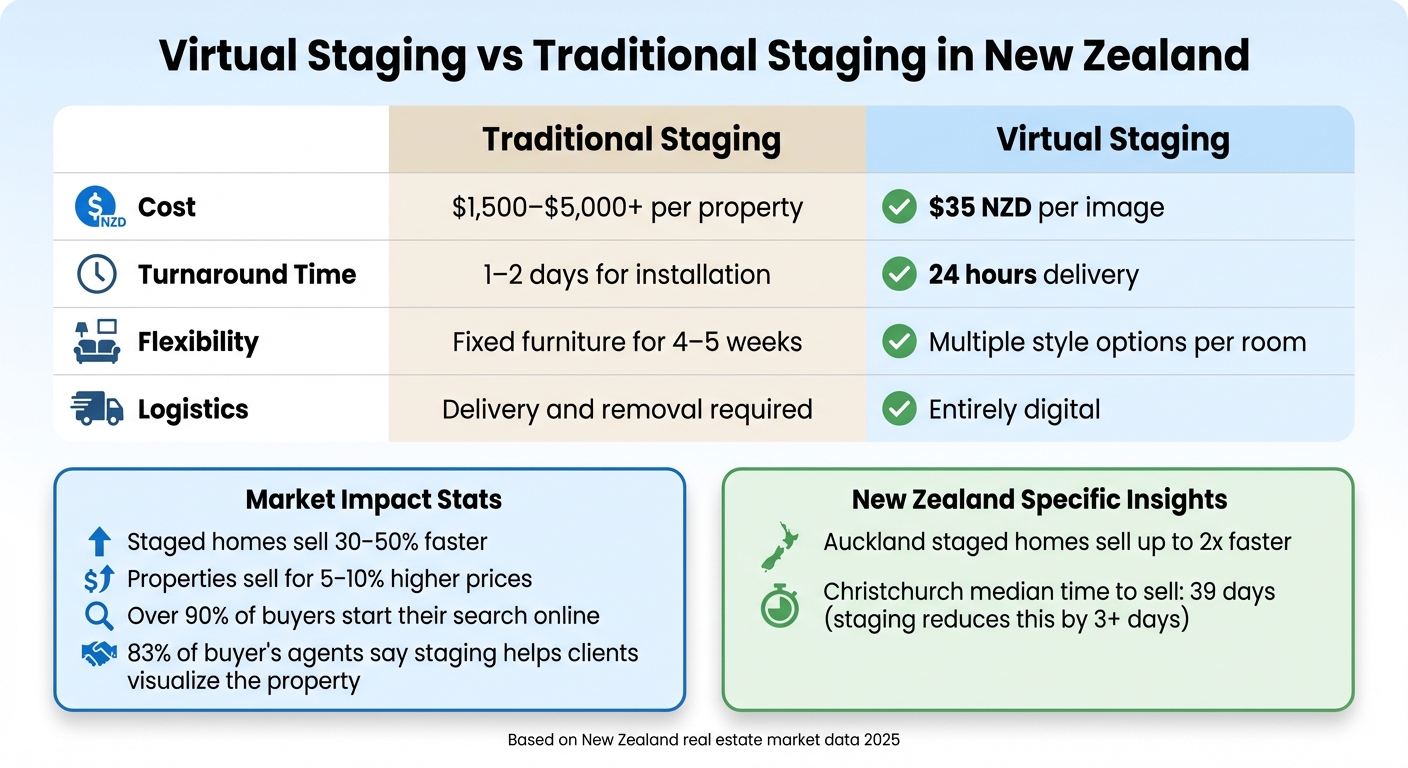
Virtual Staging vs Traditional Staging Costs and Benefits Comparison
Better Online Listings and Buyer Interest
In New Zealand, over 90% of property buyers begin their search online, browsing platforms like Trade Me Property and realestate.co.nz. This makes your listing photos the first point of contact – and they need to stand out. Empty rooms just don’t grab attention the way a beautifully staged space does.
Staged images breathe life into bare spaces, turning them into inviting, functional rooms that help buyers picture themselves living there. According to research, 83% of buyer’s agents say staging makes it easier for clients to imagine a property as their future home. Instead of guessing where furniture might fit or how a room could be used, buyers see a cosy lounge for family movie nights or a sunny dining area perfect for weekend brunches.
For properties with unique layouts, like compact Christchurch units or Auckland apartments, virtual staging demonstrates how furniture can work in the space, easing buyer concerns. The result? More interest, more enquiries, and a faster path to securing viewings.
Shorter Time on Market
Staged properties sell faster – sometimes 30–50% quicker than their unstaged counterparts in New Zealand. In Auckland’s competitive housing market, staged homes have been shown to sell up to twice as fast. For Christchurch, where the median time to sell sits at 39 days, even shaving a few weeks off can make a big difference for vendors and agents alike.
Take Harcourts Grenadier in Christchurch, for example. Between May and July 2025, their strategic use of property presentation and marketing helped achieve an auction clearance rate of 77%. Their average time on market dropped to 36 days – three days faster than the regional median – proving how staging can speed up the selling process.
By removing any uncertainty about how spaces can be used, staging helps buyers act faster. They’re no longer wondering about room layouts or potential uses; instead, they’re envisioning their future home and moving quickly to make an offer. This benefits everyone involved, from vendors to agents, and underscores the game-changing impact of virtual staging across New Zealand.
Affordable and Flexible Staging
Traditional home staging in New Zealand typically costs between $1,500 and $2,500 for a four-week period, with larger homes exceeding $5,000. Virtual staging, on the other hand, is far more affordable, with Fast Virtual Staging offering services at just $35 NZD per image – no heavy lifting required.
| Feature | Traditional Staging | Virtual Staging |
|---|---|---|
| Cost | $1,500–$5,000+ per property | ~$35 NZD per image |
| Turnaround Time | 1–2 days for installation | 24 hours delivery |
| Flexibility | Fixed furniture for 4–5 weeks | Multiple style options per room |
| Logistics | Delivery and removal required | Entirely digital |
The flexibility of virtual staging is a standout advantage. Imagine styling the same living room in modern, Scandinavian, or coastal themes to attract different buyer demographics – all without moving a single piece of furniture. There’s no need to coordinate deliveries, worry about damage during open homes, or arrange for furniture removal after the sale. Simply upload your photos, select a design style, and receive photorealistic images within 24 hours. Plus, you get two free revisions and a dedicated account manager to ensure the final product meets your needs.
For agents juggling multiple listings across Auckland and Christchurch, virtual staging offers a practical solution. It allows more properties to be professionally presented without the high costs or logistical challenges of traditional staging, making it a smart choice for today’s market.
How Fast Virtual Staging Works
The Virtual Staging Process Step-by-Step
Start by taking clear, well-lit photos that emphasise natural light and key views – features that resonate strongly with Kiwi buyers. Upload your photos, choose a design style that suits the property, and finalise your order. In just 12–24 hours, you’ll receive beautifully staged images, complete with two free revisions and dedicated support. This efficient process ensures the staging reflects the unique charm of New Zealand homes.
Features for New Zealand Real Estate
Fast Virtual Staging offers design styles tailored to New Zealand’s distinctive aesthetic preferences. For example, coastal colour schemes echo the natural tones of Auckland’s beachside suburbs, while warm, earthy palettes are perfect for Christchurch homes that experience seasonal climate changes. The platform also includes digital furniture removal to declutter spaces and create a clean, inviting look. Additionally, the Multi‑View Staging feature ensures consistent furniture placement across various angles, giving buyers a realistic sense of the space’s flow. This is particularly useful for listings on platforms like Trade Me or Realestate.co.nz. With your enhanced images ready, you’ll be set to elevate your marketing strategy.
How to Use Staged Images in Your Marketing
Once your images are polished and ready, they become powerful tools for both online and offline marketing. Use these visuals as standout "hero" shots on major property websites like Trade Me, Realestate.co.nz, and OneRoof. Considering that over 90% of New Zealand buyers begin their property search online and form first impressions within seven seconds, these images need to grab attention instantly.
For social media, staged images are perfect for targeted campaigns on platforms like Facebook and Instagram, helping you connect with local audiences. Beyond digital channels, incorporate these visuals into printed brochures and display boards at open homes. By combining online and offline marketing efforts, you create a cohesive vision of the lifestyle the property offers, making it easier for buyers to picture themselves living there.
sbb-itb-7b8b2a2
Staging Strategies for Different Property Types
City Apartments and Urban Units
Urban apartments in areas like the Auckland and Christchurch CBDs thrive with a thoughtful staging approach. In compact spaces, choosing the right furniture is key – opt for pieces that fit the room without overwhelming it. Bulky furniture can make a small apartment feel even smaller, so stick to sleek, well-sized options. Defined zones are another smart move; for example, turn a corner into a home office or set up a cosy breakfast nook. Keep window spaces clear to maximise natural light, and use mirrors strategically to reflect that light around the room. A neutral colour scheme – think soft whites and warm greys – creates a modern, inviting atmosphere that resonates with young professionals and investors.
Let’s now shift focus to family homes and suburban properties.
Family Homes and Suburban Properties
When staging suburban homes aimed at families, especially in areas like Auckland and Christchurch, the goal is to showcase a seamless indoor–outdoor flow. Virtual staging can be especially effective here, demonstrating how a deck or patio can extend the living space and create a natural connection to the outdoors. Highlighting lifestyle moments is also a great strategy – imagine a cosy lounge perfect for family movie nights, a sunny reading nook, or a BBQ area ready for summer gatherings. In Christchurch, where features like natural light, ample storage, and practical layouts are highly sought after, staging can draw attention to built-in wardrobes or transform spare rooms into practical spaces like nurseries or home offices. A polished presentation helps buyers see themselves in the home, making it easier to build an emotional connection.
Now, let’s look at how virtual staging can unlock the potential of new builds and commercial spaces.
New Builds and Commercial Properties
Empty new builds and commercial spaces can leave buyers struggling to imagine their potential. Virtual staging solves this by presenting these spaces fully furnished and functional – without the need for physical furniture. For new builds, styles like Scandinavian or Modern work beautifully, while commercial properties often benefit from an Industrial aesthetic that highlights raw architectural elements. It’s crucial to scale furniture correctly; oversized pieces can dominate a room, but well-chosen, proportionate furniture keeps the space open and inviting. Use virtual furniture to draw attention to standout features like high ceilings, timber floors, or expansive windows. For commercial properties, showcasing multiple setups – such as an open-plan office or partitioned workspaces – can demonstrate the property’s adaptability and appeal to a broader range of buyers.
Conclusion: Sell Properties Faster with Fast Virtual Staging
In New Zealand, staged homes sell 30–50% quicker than unstaged ones and often secure a final sale price that’s 5–10% higher. For Auckland’s competitive real estate market, this could mean tens of thousands of dollars in added value – especially when over 90% of buyers start their property search online. These numbers clearly highlight how staging can shorten time on the market while boosting sale prices. Fast Virtual Staging takes this strategy to the next level with its efficient, cost-effective approach.
With Fast Virtual Staging, traditional barriers like high costs and long timelines are a thing of the past. At just $35 NZD per image and a turnaround time of 24 hours, you can showcase your property’s potential without delay. Experiment with various design styles – Modern, Scandinavian, Industrial – to appeal to your ideal buyers. Whether you’re listing a cosy CBD apartment, a suburban family home, or a bare new build, you can create multiple staged versions of the same space, crafting a seamless visual narrative for a fraction of the $1,500–$5,000 typically spent on physical staging.
In high-demand markets like Auckland and Christchurch, every edge counts. For instance, Christchurch properties have a median sale time of just 39 days. Virtual staging not only helps buyers visualise their future in a property but also encourages quicker decisions, speeding up the sales process.
Fast Virtual Staging turns online browsers into serious buyers by presenting a lifestyle they can connect with. Stage smarter, sell faster, and maximise the value of your property in New Zealand’s dynamic real estate landscape.
FAQs
How can virtual staging help sell properties faster in New Zealand?
Virtual staging breathes life into empty or outdated spaces by transforming them into stunning, photo-realistic rooms. By digitally adding furniture and décor, it creates a warm and inviting atmosphere, helping buyers picture themselves living in the property. And the best part? It achieves this without the hefty costs of physical staging or renovations.
Homes showcased with virtual staging often sell quicker and fetch better prices. In fact, listings using this technique tend to spend less time on the market, with many meeting or even surpassing their asking price. For just $35 NZD per image, real estate agents can stage multiple rooms, customising designs to attract a variety of buyers or align with seasonal trends.
This approach also emphasises a property’s standout features – whether it’s abundant natural light or a spacious layout – and allows for swift updates to match any style. From Auckland to Christchurch and beyond, virtual staging not only accelerates sales but also sparks greater interest among potential buyers.
How does virtual staging save money compared to traditional home staging?
Virtual staging offers a budget-friendly solution compared to traditional staging. Prices usually fall between NZ$55 and NZ$315 per image, a stark contrast to the NZ$1,100 to NZ$7,000 or more per property that physical staging can cost. This can lead to significant savings for homeowners, all while presenting their property in an appealing way.
Instead of relying on physical furniture and decor, virtual staging uses digital alternatives. This approach eliminates the hassle and expense of transporting, renting, and arranging items, making it a quicker and more economical choice for property sellers throughout New Zealand.
Can virtual staging be tailored to appeal to different types of buyers?
Virtual staging gives real estate agents the flexibility to tailor property images to match the tastes of different buyer groups. With the help of advanced software, it’s easy to swap out furniture, adjust colour palettes, and refine décor to create spaces that resonate with specific audiences. For instance, you could design a sleek, trendy vibe for young professionals, a cosy and functional layout for families, or a low-maintenance setting that appeals to retirees.
By matching the staging style to the lifestyle and aspirations of your target market – perhaps a coastal-inspired aesthetic for buyers in Christchurch or a clean, minimalist look for Auckland investors – virtual staging helps potential buyers picture themselves living in the space. This emotional connection can be a powerful factor in accelerating purchase decisions.