
Home staging can help your property sell faster and for a higher price. In New Zealand, sellers in 2025 have two main options: physical staging or virtual staging. Here’s what you need to know:
- Physical Staging: Costs range from NZ$1,100–NZ$3,000+ GST, depending on home size and location. It involves hiring furniture and décor for 4–6 weeks. Weekly extension fees apply if the property doesn’t sell within the initial period.
- Virtual Staging: A budget-friendly choice starting at NZ$35 per image. Ideal for online listings, it provides digitally enhanced photos within 12–24 hours.
Key Differences:
- Physical staging creates an inviting atmosphere for open homes but is more expensive and requires planning.
- Virtual staging is cheaper, faster, and great for online marketing but doesn’t offer a physical setup for in-person viewings.
Some sellers combine both methods to maximise impact. Choose based on your budget, timeline, and property type.
How Much Does It Cost To List My House?⎜Ep 1411⎜Property Academy

1. Traditional Home Staging
Traditional home staging involves using actual furniture, artwork, and decor to create a welcoming and visually appealing environment. This approach allows potential buyers to get a real sense of the property’s size, layout, and lifestyle possibilities by seeing it in person.
Cost
In 2025, the cost of traditional staging in New Zealand varies widely depending on the property’s size and location. For example, in Auckland, staging a one-bedroom apartment starts at around NZ$1,100 + GST, while a three-bedroom home ranges from NZ$2,150–NZ$2,400 + GST. For larger properties, such as five-bedroom homes, prices can exceed NZ$3,000 + GST. In regional areas like Tauranga, prices are generally lower, with full staging for homes up to three bedrooms starting from NZ$1,599.
These staging packages usually include services like an onsite consultation, design planning, furniture hire, delivery, installation, insurance, and the eventual removal of items after the sale. It’s important to note that most quotes exclude GST, so you’ll need to add an extra 15% to your budget. If the property doesn’t sell within the initial staging period, weekly extension fees range from NZ$150 to NZ$350, depending on the original package.
For occupied homes, partial staging is a cost-effective option. This service, priced between NZ$400–NZ$999, enhances existing furniture with carefully selected accessories and key pieces to declutter and neutralise the space. Additionally, properties staged in November or December 2025 may benefit from a two-week free extension to cover the holiday period.
These pricing models align with the typical staging timelines.
Timeline
Traditional staging contracts generally cover a period of 4–6 weeks, which includes consultation, design, delivery, installation, and removal. Once staging is complete, professional photography is typically scheduled within 12–36 hours. This timeline also accommodates about a week for photography and marketing preparation, followed by a four-week open-home campaign. Larger or multi-level homes may require more time due to the added logistics involved.
Suitability for Property Type
Traditional staging is particularly effective in open homes, where buyers can physically explore the property. It’s especially well-suited to family homes, where staging can highlight lifestyle features – like a breakfast bar set up for a morning coffee or a cosy lounge ready for a movie night. Smaller spaces, such as one-bedroom apartments, also benefit significantly from staging, as it helps define functional areas and demonstrates how compact spaces can feel both practical and spacious.
"Only about 10% of buyers can visualise the full potential of a home. That’s why staging a home is critical. You don’t want the advantages of your home overlooked by 90% of your prospective buyers."
| Property Type | Auckland (Full Staging) | Tauranga (Full Staging) | Standard Duration |
|---|---|---|---|
| 1-2 Bedroom | NZ$1,100 – NZ$2,100+ | NZ$1,599 (up to 3BR) | 5-6 Weeks |
| 3 Bedroom | NZ$2,150 – NZ$2,400+ | NZ$1,599 | 5-6 Weeks |
| 4 Bedroom | NZ$2,600 – NZ$2,700+ | NZ$1,999+ (Custom) | 5-6 Weeks |
| 5+ Bedroom | NZ$3,000+ | NZ$1,999+ (Custom) | 5-6 Weeks |
While traditional staging requires a physical investment in furniture and decor, it offers a tangible way to showcase a property’s potential. For those looking for a more digital approach, virtual staging offers an alternative, which will be covered in the next section.
2. Virtual Home Staging (including Fast Virtual Staging)
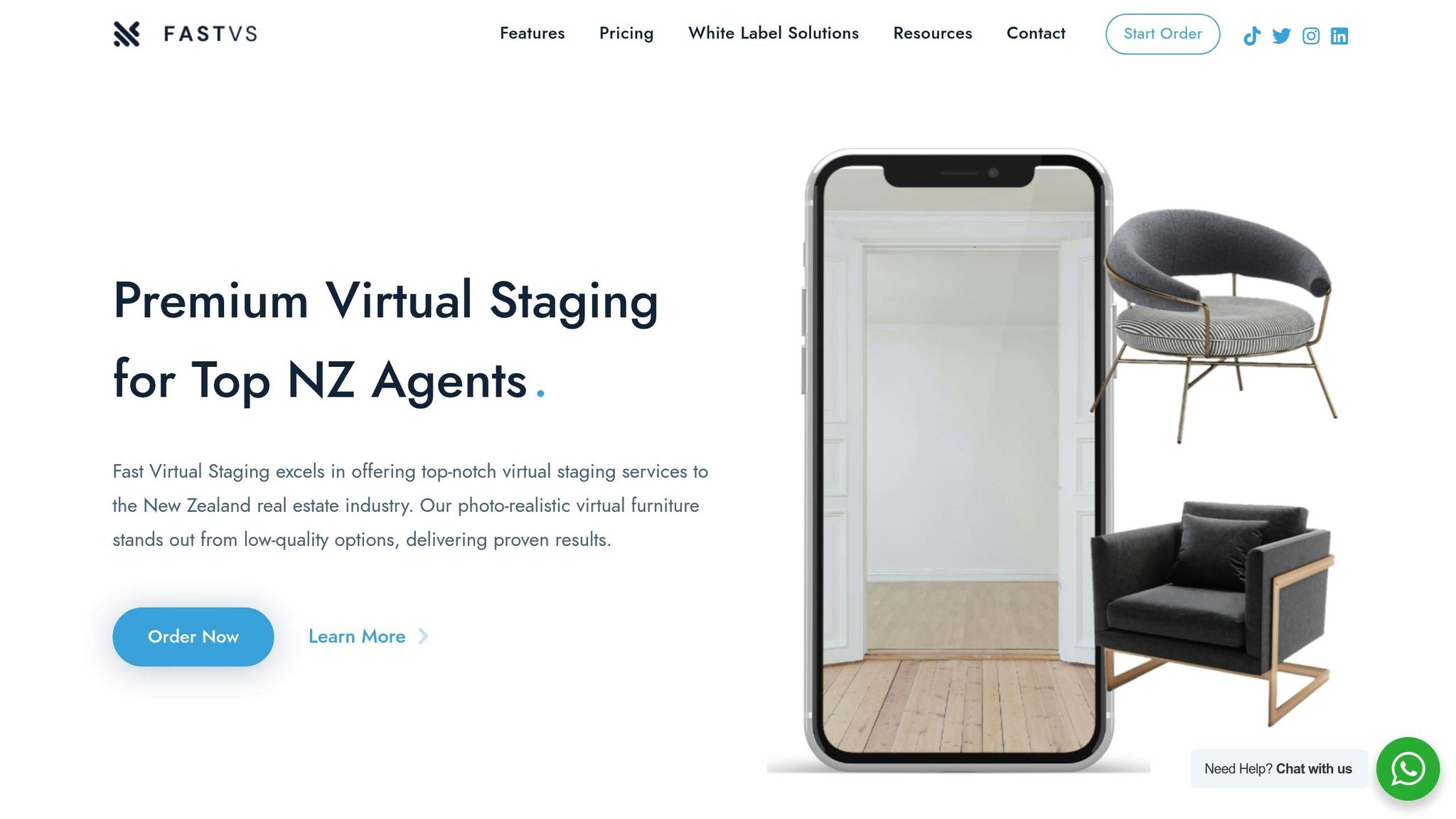
Virtual staging offers a sleek, modern alternative to traditional home staging, bringing speed and affordability to the forefront. Instead of physically furnishing a space, this method uses digital tools to transform property photos, making it a practical choice for sellers aiming to stand out in a competitive market.
Cost
When it comes to price, virtual staging is a clear winner over traditional methods. For example, Fast Virtual Staging charges just NZ$35 per image, including two revisions, with a fast turnaround of 12–24 hours. Staging a three-bedroom home typically requires five to eight key images, costing around NZ$175–NZ$280. Unlike traditional staging, there are no weekly rental fees, GST hassles, or extension charges. Plus, the digital images are yours to keep, making it a one-time expense rather than an ongoing commitment.
Timeline
Time is often of the essence in real estate, and virtual staging delivers. Once professional photos are submitted, the finished images are ready within 12–24 hours. This means your property can hit the market almost immediately after the photo shoot.
Best Fit for Certain Properties
Virtual staging works particularly well for vacant properties or homes where physical staging isn’t practical. For example, apartments with narrow staircases or homes with tricky truck access benefit greatly from this digital solution. It’s also a cost-effective choice for multi-level homes, eliminating extra fees associated with physical staging. On top of that, visually appealing digital listings tend to hold buyers’ attention longer, increasing online engagement and interest.
Eco-Friendly Choice
For sellers and agents prioritising the environment, virtual staging is a smart option. By eliminating the need for furniture transport, it reduces fuel use and carbon emissions, making it a more sustainable choice for marketing properties.
sbb-itb-7b8b2a2
Pros and Cons
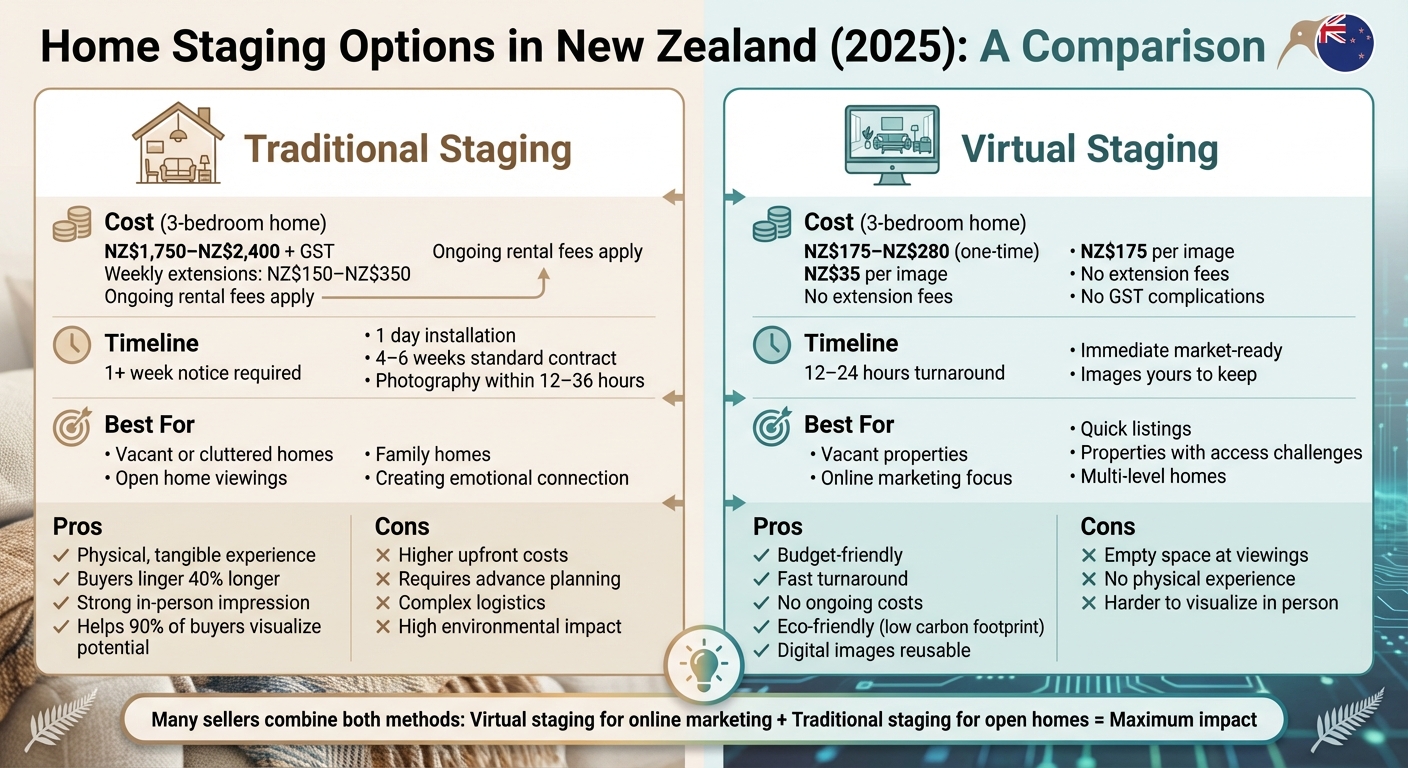
Traditional vs Virtual Home Staging Costs and Features Comparison NZ 2025
Building on the cost and timeline details above, here’s a straightforward comparison of the benefits and drawbacks of each staging option.
The right choice largely depends on your property type, budget, and timeline. Both approaches have unique strengths and limitations that can influence your selling strategy.
Traditional staging offers buyers a tangible, emotional experience when they walk through a property. It’s proven that staged homes sell much faster than those left empty. However, it can be pricey, with costs quickly adding up. You’ll also need to plan ahead, as bookings generally require at least a week’s notice. The physical logistics – like transporting furniture – add complexity and come with an environmental cost.
Virtual staging, on the other hand, is faster and more budget-friendly, costing just NZ$35 per image. With a one-time fee and minimal environmental impact, virtual staging can make your property market-ready within 12–24 hours after submitting photos. Plus, the digitally enhanced images are yours to use without any ongoing rental expenses, making it a great choice for urgent listings or properties where physical staging isn’t practical. The downside? When buyers visit in person, they’ll see an empty space, which can make it harder for them to visualise the home’s potential.
| Factor | Traditional Staging | Virtual Staging |
|---|---|---|
| Cost (3-bed home) | NZ$1,750–NZ$2,400 + extensions | NZ$175–NZ$280 (one-time) |
| Timeline | 1+ week notice + 1-day install | 12–24 hours |
| Best For | Vacant or cluttered homes, great for open homes | Vacant properties, online marketing |
| Environmental Impact | High (trucks, fuel, transport) | Low (digital only) |
Some sellers even combine the two methods: using virtual staging for online marketing while reserving traditional staging for open homes. This way, they can maximise their digital reach while still creating a strong in-person impression.
Conclusion
Deciding between traditional and virtual staging comes down to your budget, the type of property you’re selling, and how quickly you need it listed. Traditional staging often involves higher upfront costs, ongoing rental fees, and GST considerations. On the other hand, virtual staging offers a straightforward per-image pricing model with no hidden fees or extensions.
As mentioned earlier, staging plays a key role in speeding up sales and increasing final sale prices, making it a crucial step in maximising returns. This is especially important since many buyers find it difficult to imagine the potential of an empty property.
For vacant homes with scheduled open houses, traditional staging creates an inviting atmosphere that encourages visitors to linger – sometimes up to 40% longer during viewings. However, if you’re working with a limited budget, need to list your property quickly, or are dealing with a tenanted home, virtual staging offers a practical solution. It enhances your online presence without the logistical hurdles that come with physical staging. Combining both methods can be a smart strategy for achieving the best market impact.
Some sellers opt for a hybrid approach – using virtual staging to attract attention online and traditional staging to leave a strong impression during in-person viewings. As New Zealand’s property market increasingly embraces digital-first marketing, services like Fast Virtual Staging are becoming a go-to option for sellers looking for professional results on a budget. Ultimately, the right staging method will depend on what works best for your property and your financial plan.
FAQs
What are the advantages of using both traditional and virtual home staging together?
Mixing traditional and virtual home staging is a smart way to boost a property’s appeal, both online and during in-person viewings. Virtual staging allows you to digitally furnish and style property photos, creating eye-catching listings that grab attention online – all without the expense of physical furniture. Meanwhile, traditional staging brings the space to life for open homes, using real furniture and decor to create a warm, inviting atmosphere.
This combination not only widens your reach but can also speed up sales and even attract higher offers. Virtual staging showcases the property’s potential with striking visuals, while traditional staging helps buyers form an emotional connection when they visit. By using both techniques, you create a polished presentation that highlights the best features of your property and leaves a lasting impression on potential buyers.
What’s the best way to choose between traditional and virtual staging for my property?
When deciding between traditional staging and virtual staging in New Zealand, your choice will largely depend on your budget, timeline, and the audience you’re aiming to impress.
Virtual staging tends to be the more budget-friendly and time-efficient option. Prices typically range from NZ$35 to NZ$200 per image, with turnaround times as short as 12–48 hours. It’s particularly effective for online listings, vacant homes, or appealing to overseas buyers. One of its standout advantages is the ability to update designs as often as needed, making it a flexible tool for showcasing spaces digitally.
On the other hand, traditional staging involves using actual furniture and décor to dress up a property. This approach comes with higher costs – usually between NZ$1,500 and NZ$5,000+ per home – and requires 7–14 days to organise. However, it shines when it comes to creating a strong emotional connection during in-person viewings. It’s often the go-to choice for luxury properties, family buyers, or homes expecting a high number of open-home attendees.
If your priorities are speed and cost, virtual staging is likely the way to go. But for a more tactile and immersive experience that can leave a lasting impression, traditional staging might be worth the extra investment.
What are the environmental advantages of choosing virtual staging over traditional staging?
Virtual staging brings a range of environmental perks when compared to traditional staging methods. By removing the need for actual furniture, along with the associated transportation and storage, it cuts down on resource consumption and waste. Plus, it helps reduce carbon emissions since there’s no reliance on delivery trucks or the production of physical furniture.
For homeowners and real estate professionals in New Zealand, virtual staging offers a greener alternative. It supports the push to reduce environmental impact while still delivering visually stunning property listings.