
Virtual staging is transforming how vacant homes are marketed in New Zealand, especially as the property market slows. By digitally adding furniture and decor to empty rooms, sellers can make their listings more appealing to buyers browsing online. This cost-effective alternative to physical staging helps buyers visualise how a space could look, creating a stronger emotional connection and encouraging offers.
Key Takeaways:
- What It Is: Virtual staging uses digital tools to furnish empty rooms in property photos.
- Why It Works: Buyers often struggle to imagine living in vacant homes. Staged images make spaces feel more inviting and functional.
- Cost: At $35 NZD per image, it’s far cheaper than physical staging, with no ongoing fees.
- Impact: Staged homes attract more interest, leading to quicker sales and potentially higher offers.
- How It’s Done: Upload clear property photos, select a design style, and receive polished images in 12–24 hours.
In a competitive market, virtual staging ensures your property stands out across online listings, social media, and print marketing.
Key Benefits of Virtual Staging for Vacant Homes
Improving Buyer Engagement and Emotional Connection
Empty rooms can feel uninspiring and often leave buyers struggling to imagine how they’d use the space. Virtual staging changes this by showcasing each room’s potential with carefully designed layouts and inviting details. For example, a digitally staged lounge with plush furniture and soft lighting creates a warm, welcoming vibe, while a styled bedroom highlights the flow and comfort of the space.
This approach helps buyers form a stronger emotional connection by allowing them to picture themselves living in the home. Whether it’s envisioning family dinners in a beautifully staged dining area or relaxing in a cosy lounge, these visuals build confidence and reduce hesitation. When buyers feel a connection, they’re more likely to book viewings and seriously consider making an offer. Plus, virtual staging achieves all this while being far more affordable than traditional staging methods.
Cost-Effectiveness Compared to Physical Staging
Physical staging can be costly, with high upfront charges and ongoing fees. Virtual staging, on the other hand, offers a budget-friendly solution without compromising on quality. For instance, Fast Virtual Staging charges just $35 NZD per image, a fraction of what physical staging typically costs. It also eliminates the need for recurring fees and allows for quick updates if market feedback suggests adjustments are needed.
This cost-efficient approach helps sellers and agents maintain a polished presentation without blowing the budget. By keeping expenses low while delivering high-quality visuals, virtual staging supports a smoother and more affordable sales process.
Faster Sales and Higher Offers with Real NZ Examples
A strong visual presentation can make a world of difference when it comes to attracting buyers. Homes enhanced with virtual staging often see a rise in online enquiries and longer engagement from interested buyers. Professionally staged images make it easier for buyers to visualise the home’s potential, which can elevate its perceived value. This often leads to quicker sales and, in some cases, higher offers – especially in a market where buyers take their time to decide.
What’s more, the impact of virtual staging doesn’t fade over time. Whether a property sells quickly or stays on the market longer, the high-quality visuals continue to draw attention and keep the listing appealing. This consistency is particularly valuable in New Zealand’s slower real estate market, where standing out can make all the difference. By ensuring properties look their best across all marketing channels, virtual staging keeps them competitive and attractive to serious buyers.
How Virtual Staging Works: Step-by-Step Guide
Preparing and Uploading Property Photos
Start by capturing clear, wide-angle photos of each room. Make sure the spaces are tidy, free of clutter, and well-lit with natural light to highlight the layout and flow of the rooms. Wide shots from multiple angles work best to showcase the full potential of the property.
Once your photos are ready, upload them to Fast Virtual Staging’s user-friendly platform. The system supports standard image formats and allows you to specify your preferred design styles. This step lays the groundwork for transforming empty rooms into visually appealing, ready-to-market spaces.
Selecting Design Styles for the NZ Market
Choose design styles that resonate with New Zealand lifestyles and preferences. Popular choices include Scandinavian designs, known for their clean lines, neutral colours, and natural wood elements, and modern contemporary styles, which feature sleek furniture and bold accents.
For coastal homes or properties in smaller towns, styles that incorporate natural materials and earthy tones work well. Think about your target audience and the property’s location when selecting a style. For example, a family home in Christchurch could benefit from warm, cosy furniture arrangements, while a compact Auckland apartment might stand out with space-saving, modern pieces. Fast Virtual Staging offers a range of customisable design options tailored to local buyer expectations, ensuring the property appeals to its intended market.
Once you’ve picked the perfect design style, the next step is to review the staged images.
Reviewing and Receiving Staged Images
After you’ve uploaded your photos and chosen your design preferences, you’ll receive a preliminary mockup or draft to review. This draft allows you to see how the staged furniture and decor will look and gives you the chance to request adjustments if needed.
Examine the mockup and request changes such as swapping furniture pieces or tweaking colours. Fast Virtual Staging provides two free revisions with each order, ensuring the final product meets your expectations.
The platform promises a quick turnaround, delivering final high-resolution images within 12–24 hours. Once approved, these images will be emailed to you, ready to be used across your marketing channels. In New Zealand’s slower-moving property market, these polished, visually appealing images can give your listing the edge it needs to stand out.
Getting the Most from Virtual Staging
Highlight Key Property Features
Virtual staging shines when it highlights a property’s standout features. By carefully placing furniture, you can guide buyers’ attention to the most appealing aspects of the home.
For open-plan layouts, use furniture to define distinct living areas while keeping the space open and inviting. For example, a dining table can subtly separate the dining area from the lounge without disrupting sightlines, helping buyers visualise how they might use the space.
If the property has scenic views, arrange seating to emphasise windows and vistas. Avoid placing virtual furniture or décor that blocks these natural selling points. Instead, add touches like understated decorations that complement the outdoor scenery.
High ceilings or unique architectural details, such as exposed beams or heritage features, should remain the centre of attention. Choose furniture that fits the proportions of the room. Oversized pieces can make a space feel cramped, while furniture that’s too small may get lost in larger rooms.
Once the key features are highlighted, it’s time to match the design to what local buyers are looking for.
Tailor Designs to Local Buyer Preferences
Understanding the preferences of your target market is essential for effective virtual staging. Take the time to research the demographics and lifestyle of potential buyers in your area.
Neutral tones like whites, soft greys, and warm beiges create a clean, inviting canvas that appeals to a wide range of buyers – from young professionals to families and retirees. This approach also allows buyers to imagine their own furniture and style in the space.
Keep the interiors depersonalised and clutter-free. Virtual staging should aim to create a welcoming, spacious environment that makes it easy for buyers to picture themselves living there.
Consider the local flavour when designing. For instance, coastal homes in regions like Hawke’s Bay can benefit from décor inspired by the natural surroundings, while family homes in Hamilton might use furniture placement to showcase outdoor areas, such as a backyard perfect for entertaining.
Maximising the perception of space is particularly important in New Zealand, where larger homes are often in high demand. Arrange furniture to make rooms feel as spacious as possible while maintaining a natural flow between areas.
Once your staging is complete, make sure these images are seen everywhere.
Use Staged Images Across Marketing Channels
To make the most of your virtual staging investment, use these images across every platform where buyers might encounter the property.
Start with online property listings. Use the most striking staged image – typically the main living area – as the hero photo to grab attention in search results. A strong first impression encourages buyers to click through and explore more.
Social media is another powerful tool. Sharing staged images on platforms like Facebook and Instagram can help you reach a wider audience. These platforms also allow you to showcase the lifestyle the property offers, creating a more engaging story for potential buyers.
Print materials, such as brochures and flyers, also benefit from polished, staged images. When buyers take these materials home after an open house, the visuals help keep the property fresh in their minds.
Email campaigns can use staged images to maintain interest in properties that may take longer to sell. Including these visuals in your emails makes them more engaging and encourages buyers to revisit the listing.
Using high-quality staged images consistently across all marketing channels not only boosts the property’s appeal but also builds confidence among potential buyers.
sbb-itb-7b8b2a2
Best AI Virtual Staging Tool for REALTORS 2025
Fast Virtual Staging: Solutions for New Zealand Real Estate
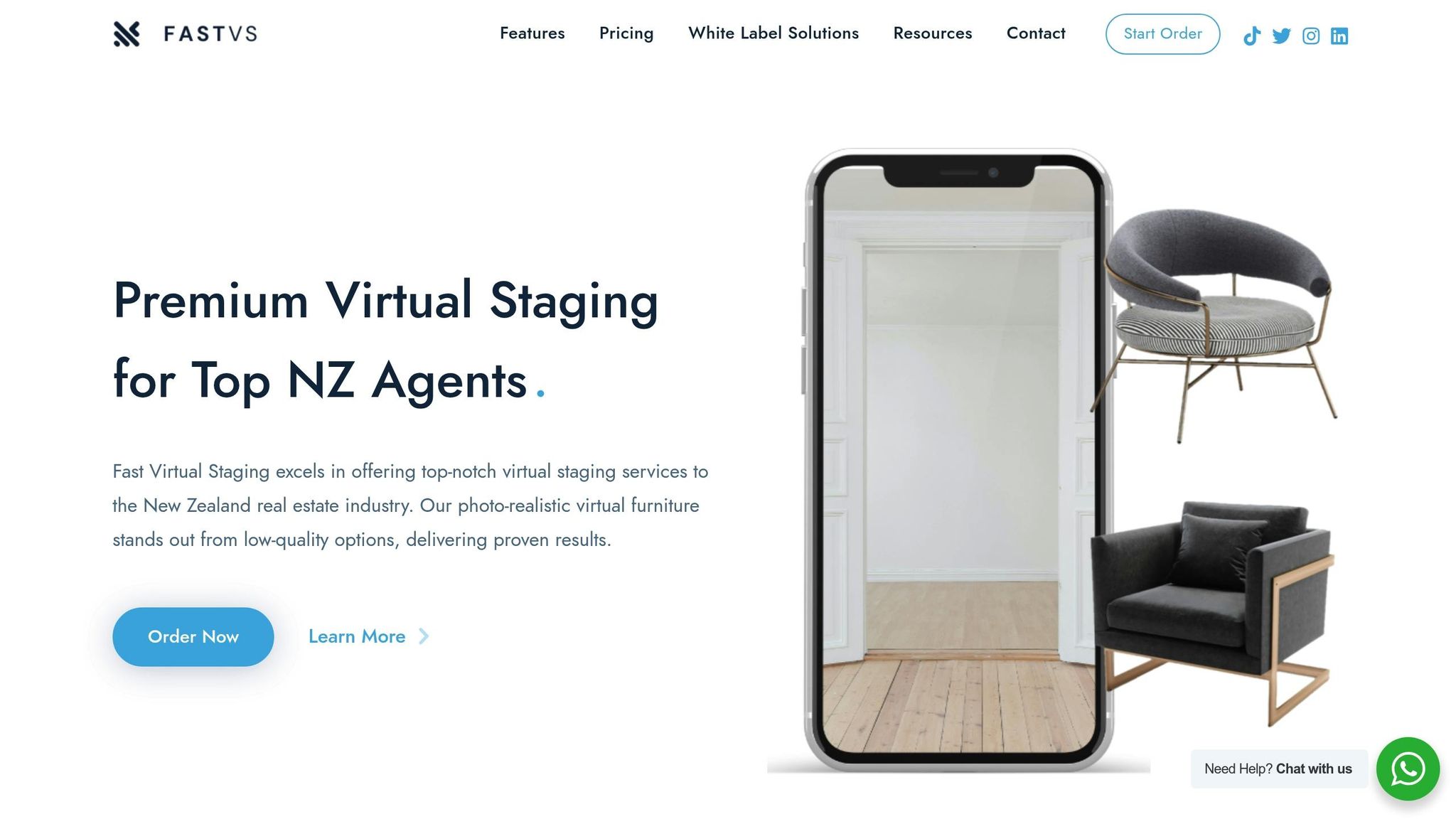
Fast Virtual Staging is designed to help real estate professionals thrive in New Zealand’s competitive property market. Below, we explore the standout features that make this service a valuable tool for property marketing across the country.
Affordable and Photo-Realistic Staging
Fast Virtual Staging offers high-quality, photo-realistic virtual furniture created by a skilled 3D design team. Unlike automated AI-generated alternatives, these renders are tailored to showcase the unique character of New Zealand homes.
At just $35 NZD per image, paired with a 12–24-hour delivery guarantee (or free if delayed), this service provides a cost-effective solution for stunning visuals. The quick turnaround ensures you can confidently meet deadlines for marketing campaigns and open homes.
Whether you’re promoting a stylish Auckland apartment or a spacious family home in Canterbury, these realistic images help potential buyers imagine themselves in the space. This emotional connection often leads to more decisive purchasing decisions. The designs also reflect local tastes, ensuring they resonate with the New Zealand market.
Customisable Styles and Easy Revisions
Every property attracts different buyer demographics, and Fast Virtual Staging caters to this by offering a variety of design styles. Choose from themes such as Scandinavian, French Country, or Modern to align with the property’s character and regional trends. For example, a Coromandel beachfront Bach might shine with coastal-inspired décor, while a sleek Wellington townhouse could benefit from minimalist, modern furnishings.
The service includes two free revisions, allowing you to tweak the designs to perfection. A dedicated account manager is also on hand to guide you through the process, ensuring smooth communication and results that match your vision and appeal to local buyers.
White-Label Solutions for Real Estate Professionals
Fast Virtual Staging doesn’t just help property sellers – it also supports photographers and agencies looking to expand their offerings. With white-label solutions, you can provide virtual staging services under your own brand. This allows you to seamlessly add high-quality staging to your portfolio without investing in new resources or expertise.
Conclusion: Using Virtual Staging for Success in NZ
Selling property in New Zealand can be challenging, especially when dealing with vacant homes in a slower market. Virtual staging offers a transformative solution, turning empty spaces into warm, inviting homes that help buyers picture themselves living there.
The advantages are undeniable: better buyer engagement through emotional appeal, lower costs compared to traditional staging, and quicker sales with the potential for higher offers. From modern Auckland apartments to cosy family homes in Canterbury, virtual staging can target specific buyer groups with designs that suit their preferences. It’s a tool that every Kiwi real estate marketing plan should consider.
The process is straightforward: upload high-quality photos, choose designs that match local tastes, and receive professionally staged images in as little as 12–24 hours. Tailored for New Zealand’s diverse market, this approach ensures the results align with local expectations and style preferences.
Fast Virtual Staging supports real estate professionals across NZ with photo-realistic renders priced at $35 NZD per image, offering two free revisions and dedicated account management. Whether you’re a real estate agent, photographer, or agency, their white-label solutions let you expand your services without the need for extra resources or expertise. It’s a smart way to gain a competitive edge.
In a sluggish market, virtual staging makes all the difference by turning empty rooms into aspirational spaces that grab buyers’ attention and influence their decisions. Incorporate virtual staging into your strategy today – it’s a small investment that can lead to faster sales and happier clients.
FAQs
How does virtual staging help potential buyers feel more connected to a home?
Virtual staging breathes life into empty spaces, turning them into inviting, well-designed interiors that help buyers picture themselves living there. By adding carefully chosen furniture and décor, it adds warmth and character, making the property feel less like an empty shell and more like a home.
This approach creates an emotional connection, allowing potential buyers to envision the space as their own and better understand its possibilities. Plus, it offers the flexibility to tailor designs to suit different tastes and lifestyles, appealing to a wide range of buyers. The result? A more attractive listing that can lead to faster sales, even when the market is slow.
What virtual staging design styles work best for different regions in New Zealand?
In New Zealand, virtual staging styles often reflect the character and preferences of different regions. Take urban hubs like Auckland and Wellington, for example. These cities typically lean towards modern, minimalist designs that highlight open layouts, abundant natural light, and sleek, clean lines – perfect for contemporary city living.
On the other hand, areas like Canterbury and the Bay of Plenty often gravitate towards cosier, more traditional styles. These designs focus on creating warmth and comfort, making them ideal for family homes and a more laid-back lifestyle. By aligning your virtual staging with the specific tastes and housing trends of each region, you can make a property far more appealing to potential buyers.
How can real estate agents use virtual staging to boost property visibility and attract buyers?
Real estate agents in New Zealand are turning to virtual staging as a powerful tool to make properties more inviting and capture buyers’ attention. By incorporating high-quality staged images into their marketing strategies, agents can showcase a home’s potential in a way that resonates with potential buyers. These enhanced visuals can be featured in online property listings, shared across social media platforms, and included in virtual tours, leaving a strong and memorable impression.
One effective approach is to use before-and-after comparisons. These side-by-side visuals help buyers see how an empty space can be transformed into a warm, fully furnished home, making it easier for them to picture themselves living there. Sharing these striking images across various channels not only boosts the property’s appeal but also expands its reach to a broader audience, including international buyers. In a slower property market, this can be a game-changer, helping homes stand out and sell more quickly.