
Virtual staging is a cost-effective way to digitally furnish and decorate property photos, helping buyers visualise spaces. In New Zealand, prices range from $35–$200 per room, significantly cheaper than physical staging, which can cost $1,100–$7,000+ per property. Virtual staging is faster too, with delivery in 12–48 hours, compared to weeks for physical setups.
Key Points:
- Cost: Virtual staging costs $35–$200 per image; physical staging starts at $2,400 for small homes.
- Time: Virtual staging takes hours; physical staging can take weeks.
- Flexibility: Virtual staging allows unlimited design changes, while physical setups are limited by available furniture.
- Best for: Online listings, new builds, and rental properties.
Quick Comparison:
| Feature | Virtual Staging | Physical Staging |
|---|---|---|
| Cost | $35–$200 per image | $1,100–$7,000+ per home |
| Delivery Time | 12–48 hours | Weeks |
| Design Options | Unlimited styles | Limited inventory |
| Use Cases | Online marketing | Open homes, luxury homes |
Virtual staging is a game-changer for New Zealand’s property market, offering a fast, affordable way to enhance listings and attract buyers.
Virtual Staging Costs in New Zealand
Standard Price Ranges
In New Zealand, virtual staging typically costs between $50 and $200 per room, making it a budget-friendly option for property marketing. For instance, Fast Virtual Staging offers a competitive rate of $35 per image, delivering high-quality, photo-realistic renders within 12–24 hours.
When compared to traditional staging, the savings are clear. Staging a home valued at $800,000 can cost around $6,000 for traditional methods, while virtual staging ranges from $200 to $800. Full professional staging for multi-bedroom homes can climb to $4,000–$7,000+. Virtual staging delivers similar visual appeal for a fraction of the price, making it a practical choice for many sellers.
What Affects Pricing
Several factors influence virtual staging costs, from the number of images to the complexity of the project:
- Number of images: Since most providers charge per room or image, larger homes with multiple bedrooms, living areas, or outdoor spaces will naturally cost more than smaller properties.
- Design complexity: Simple furniture placements with standard pieces are more affordable. However, custom styling, intricate room layouts, or luxury design requests can increase costs.
- Turnaround time: Standard delivery is usually 24–48 hours, but expedited services – like Fast Virtual Staging’s 12–24 hour guarantee – may involve extra charges for rush orders.
- Designer expertise: Experienced designers often charge higher rates but deliver more realistic and visually appealing results, which can significantly enhance your property’s marketing appeal.
- Additional services: Features like white-label options for photographers, custom furniture designs, or advanced editing (e.g., wall or floor alterations) may add to the overall cost. Some providers also offer extras like 360° virtual staging or virtual tours for an additional fee.
- Furniture inventory: Providers with an extensive, high-quality furniture library might charge more, but they often produce more dynamic and realistic staging results.
What’s Included in the Cost
Virtual staging packages typically include a variety of features designed to maximise value:
- Free revisions: Most services offer up to two revisions, allowing adjustments to furniture placement, colours, or styling without extra charges.
- Guaranteed delivery times: Standard turnaround is 24–48 hours, with some providers, like Fast Virtual Staging, offering delivery within 12–24 hours to meet tight deadlines.
- Account management and design options: Clients often receive dedicated support and access to a range of design styles, from modern to more traditional aesthetics.
- Discounts for partners: Real estate photographers and marketing agencies can benefit from white-label discounts, making virtual staging even more cost-effective.
- Basic image enhancements: Adjustments like brightness, colour correction, and general property presentation improvements are included. However, more advanced edits, such as furniture removal or structural changes, may incur extra fees.
Virtual staging provides a cost-effective and visually impactful way to showcase properties, offering flexibility and customisation that can meet a wide range of marketing needs. By understanding the factors that influence pricing and the features included, sellers can make informed decisions to best present their homes.
Best AI Virtual Staging Tool for REALTORS 2025
Virtual Staging vs Traditional Home Staging
In New Zealand’s property market, comparing costs, timelines, and benefits between virtual and traditional home staging is essential for making informed decisions. The differences in cost and delivery speed are particularly striking.
Cost Comparison Table
The financial gap between virtual staging and traditional home staging is hard to ignore. Here’s how they stack up:
| Feature | Virtual Staging | Traditional Home Staging |
|---|---|---|
| Upfront Cost | $35–$200 NZD per image | $1,100–$7,000+ NZD per property |
| Time Required | 4–8 hours | Several weeks |
| Flexibility | Unlimited design changes | Limited to available inventory |
| Duration | Permanent digital images | Typically 5–8 weeks rental |
| Best Use Cases | Online listings, new builds | Open homes, luxury properties |
The financial and time-saving benefits of virtual staging become even more evident for larger properties. Traditional staging for expansive homes can cost as much as $15,000 for a complete setup.
Benefits of Virtual Staging
Virtual staging has carved out a significant niche in New Zealand’s fast-paced property market. One of its biggest advantages is speed. Photos can be transformed within 4–8 hours, while traditional staging requires weeks to organise furniture, décor, and logistics.
Flexibility is another standout feature. Virtual staging allows you to experiment with various design styles, whether it’s sleek Scandinavian minimalism or opulent modern luxury. Unlike traditional staging, you’re not limited by physical inventory, and adjustments can be made quickly to fine-tune the property’s appeal for potential buyers.
Cost predictability is also a major draw. Virtual staging is priced per image, so you know your exact costs upfront. In contrast, traditional staging involves variable expenses – delivery fees, setup charges, weekly rentals, and even potential damage costs – that can push the total far beyond initial estimates.
"Some people walk in an empty house and that’s all they see – an empty house – and they can’t picture what it would look like staged, so this helps a lot."
- Farrell Desselle, Listing Coordinator at Redfin Realty
When Physical Staging Works Better
Despite the many benefits of virtual staging, traditional staging still plays a valuable role in specific situations. High-end luxury properties and in-person open homes often benefit from physical staging, as it allows potential buyers to experience the quality and craftsmanship of actual furniture and décor. This tangible element can make a strong impression during property viewings.
That said, with many successful sales now happening online, virtual staging provides the visual appeal needed to generate interest and drive viewings. Understanding these distinctions sets the stage for exploring how virtual staging is shaping the future of real estate in New Zealand.
sbb-itb-7b8b2a2
How Virtual Staging Helps New Zealand Real Estate
Virtual staging is transforming the way properties are marketed in New Zealand, offering a fresh approach to capturing buyers’ attention. In a competitive property market, where first impressions are everything, virtual staging takes empty and uninspiring spaces and turns them into inviting, well-designed interiors. This visual transformation doesn’t just make a property look appealing – it actively drives better online engagement and, ultimately, sales results.
Better Online Listings
In today’s digital-first property market, standing out online is crucial. Virtual staging gives properties the edge by making them appear brighter, more spacious, and more welcoming in photos. This is especially important on platforms like Trade Me Property and realestate.co.nz, where potential buyers are scrolling through countless listings. A virtually staged image can create the kind of emotional connection that an empty room simply can’t replicate.
This approach is particularly effective for international buyers who can’t attend open homes in person. Instead of just seeing an empty shell, they’re presented with a vision of what the property could be – a lifestyle they can imagine themselves stepping into.
"Staging helps buyers emotionally connect with a home and see its full potential. That connection is often what turns a showing into a sale." – The Look, NZ
Impact on Sales Results
The benefits of virtual staging go beyond just catching the eye. It has a proven impact on sales, helping properties sell faster and often at higher prices. In New Zealand, staged homes can sell up to three times faster than unstaged ones. Even more impressively, virtual staging can add 5–10% to a property’s sale price, with an average return on investment of 5–10 times the initial cost.
Here’s a snapshot of how staging affects different types of properties:
| Property Type | Days on Market (Unstaged) | Days on Market (Staged) |
|---|---|---|
| Inner-city Apartment | 45 | 28 |
| Suburban Family Home | 60 | 35 |
| Executive Home | 90 | 60 |
| Source: Aggregated data from The Look & local agents, 2023 |
Over 80% of real estate agents agree that staging helps buyers visualise a property as their future home. This ability to create a connection reinforces virtual staging’s growing importance in modern real estate marketing.
Fast Virtual Staging Features
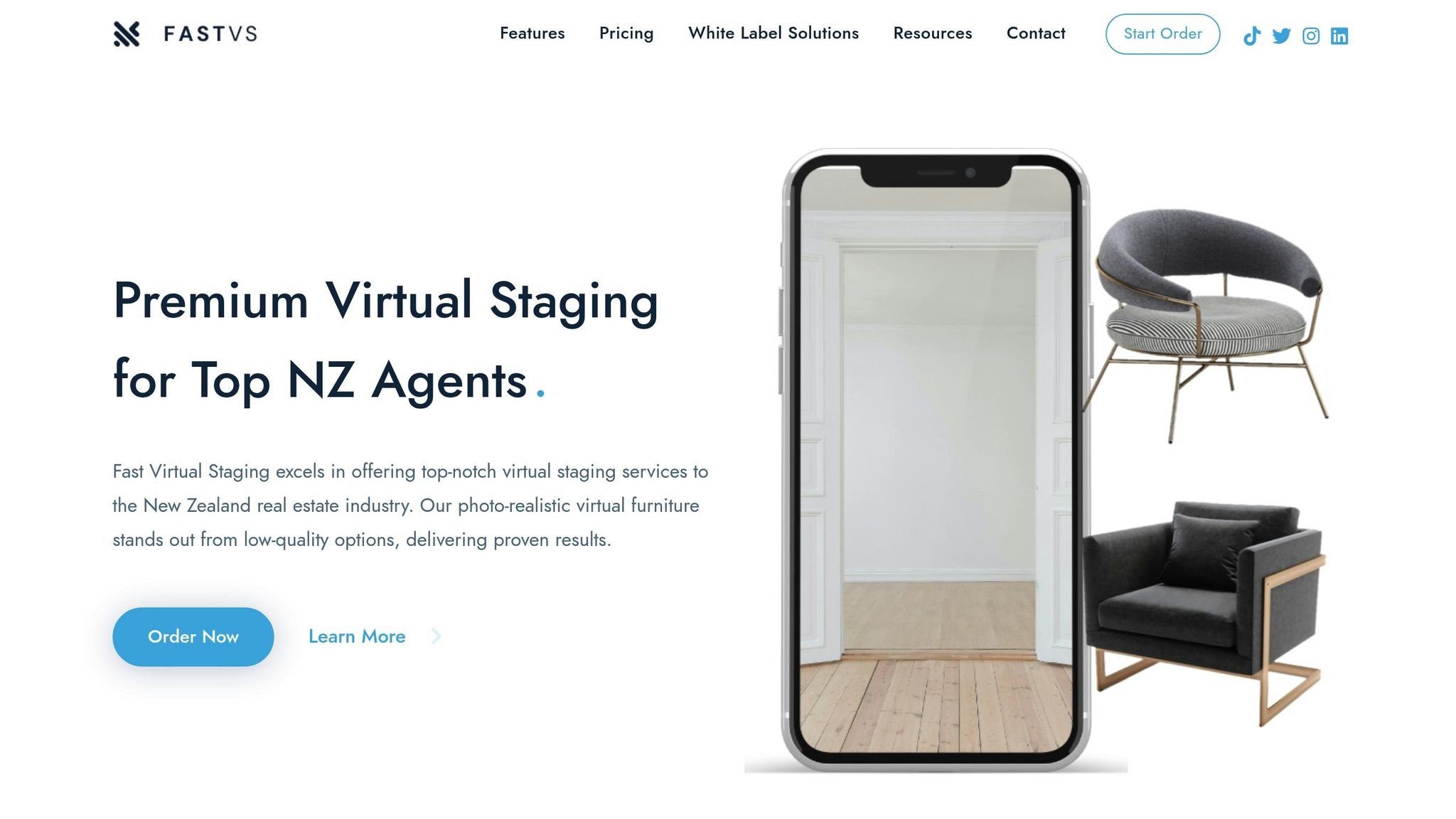
Fast Virtual Staging takes these benefits a step further with services designed to speed up the marketing process. Their photo-realistic renders are tailored specifically for New Zealand properties and are delivered within 12–24 hours, ensuring properties hit the market quickly.
The service offers a range of design styles to appeal to New Zealand buyers, along with two free revisions to make sure the final images are just right. With a personal account manager included, the process is smooth and efficient, ensuring the staged images align perfectly with the property’s target audience.
For real estate photographers and agencies juggling multiple listings, Fast Virtual Staging provides white-label solutions. These come with partner discounts and allow professionals to seamlessly integrate virtual staging into their services while maintaining their own branding. The streamlined order process means properties can go from being photographed to fully staged and market-ready in just 24 hours.
Whether it’s a compact Auckland apartment, a spacious Christchurch family home, or even a commercial office space, Fast Virtual Staging’s realistic renders help buyers and tenants see the full potential of a property. This versatility makes it a valuable tool for both residential and commercial real estate marketing.
Summary: Virtual Staging Costs in New Zealand
When comparing virtual staging to traditional staging, the cost advantage is hard to ignore. Virtual staging services typically cost between $25–$65 per image for mid-range options, while high-end renderings can range from $70–$100 per image. In contrast, traditional staging costs start at around $2,400 for a 2-bedroom home and can exceed $12,000 for luxury properties. A standard package of 12 virtual staging photos usually costs between $350 and $900, translating to savings of 80–95% compared to physical staging. Additionally, traditional staging comes with ongoing rental fees of $500–$600 per room per month.
"Virtual staging is no longer a novelty – it’s a profit-driving must-have." – Zoe Jovic
The benefits of staging are clear: staged properties tend to sell for 6–10% more and in just 23 days on average, compared to 184 days for vacant homes. Virtual staging, in particular, has been shown to cut market time by 73% and deliver an ROI of 500–3,650%.
Fast Virtual Staging offers a competitive rate of $35 per image, which includes two free revisions, quick delivery within 12–24 hours, and a dedicated account manager. They cater to both residential and commercial properties, providing design styles tailored to appeal to Kiwi buyers, while meeting the fast-paced demands of today’s property market.
FAQs
How does virtual staging make property listings more appealing than traditional staging?
Virtual staging takes an empty or outdated space and turns it into a beautifully furnished room, helping potential buyers picture themselves living there. By showcasing the best features of a home, it creates a warm, inviting atmosphere – perfect for online listings where first impressions are everything.
Unlike traditional staging, virtual staging is a budget-friendly and flexible alternative. You can experiment with various styles and layouts without the hassle of moving actual furniture. This makes it simpler to catch a buyer’s eye, speed up the sales process, and even attract stronger offers.
What should I look for when selecting a virtual staging service in New Zealand?
When choosing a virtual staging service in New Zealand, you’ll want to weigh a few key factors to make sure it suits your needs. Start by thinking about your target audience – what kind of buyers are you aiming to attract? Then, consider the design style that aligns with local tastes and preferences, as this can make a big difference in how appealing the property looks.
It’s also smart to look at the service’s track record. Check out client reviews and browse through examples of their previous work to see if their quality matches your expectations. Don’t overlook practical details either, like the cost per image, the realism of the staged photos, and whether they can deliver within your timeline and budget. All these elements together ensure the staging not only enhances your property’s appeal but also helps draw in serious buyers.
Is virtual staging suitable for all types of properties, including luxury homes and commercial spaces?
Virtual staging offers a flexible way to showcase all types of properties, from luxury homes to commercial spaces. It’s an effective way to boost a property’s visual appeal, allowing potential buyers or tenants to picture how the space could work for them. For upscale homes, virtual staging brings attention to premium features and adds an air of elegance. Meanwhile, for commercial spaces, it can demonstrate practical layouts and design options.
This approach is not only budget-friendly but can also be customised to fit any property, making it a smart choice for real estate marketing across New Zealand.