
Virtual staging is changing how properties are marketed in New Zealand, especially for new builds and off-the-plan sales. By digitally furnishing empty spaces or architectural plans, it helps buyers picture a property as a liveable home. This approach addresses challenges like empty rooms feeling uninviting or floor plans being hard to visualise. It’s affordable, quick (images ready in 12–24 hours), and tailored to Kiwi design preferences, making it a must-have for real estate professionals.
Key Points:
- What it is: Adds digital furniture and décor to property images.
- Why it’s useful: Helps buyers visualise the space, boosting interest and sales.
- Cost: $35 NZD per image with services like Fast Virtual Staging.
- Popular styles: Coastal, Modern Farmhouse, Scandinavian, Urban Industrial.
- Results: Staged homes sell faster and for 5–10% more on average.
Virtual staging is a practical way to make properties stand out in NZ’s competitive market while catering to local tastes and expectations.
Easy low cost virtual staging for real estate photography
How Virtual Staging Improves Buyer Interest and Sales Results
Virtual staging has become a game-changer in New Zealand’s property market, enhancing buyer engagement and speeding up sales. By digitally presenting a property’s potential, it transforms uncertainty into confidence, giving listings a competitive edge online.
Helping Buyers Visualise Life in the Space
Empty rooms and floor plans often leave buyers guessing about a property’s true potential. Virtual staging bridges this gap, turning vacant spaces into warm, functional homes. In fact, staged homes sell 73% faster and often fetch higher prices than their unstaged counterparts.
For new builds, where buyers must commit without experiencing the finished property, virtual staging offers a lifeline. It helps buyers clearly picture how a space could look and feel, making it easier for them to imagine living there. This clarity shifts the focus from concerns about furniture placement to the lifestyle the home can provide.
The effectiveness of this approach is evident in real-world results, as highlighted in the following case studies.
Case Studies: The Impact of Virtual Staging
The numbers speak for themselves. Staged homes can sell for 5–10% more on average than unstaged properties. Virtual staging not only attracts more online attention but also drives higher engagement, such as increased social media shares and better click-through rates on listings.
Additionally, staging can dramatically cut the time a property spends on the market – by as much as 73%. This is especially advantageous for developers juggling multiple units or dealing with the financial strain of unsold inventory.
These outcomes highlight the ability of virtual staging to create a lasting impression, particularly in online listings.
Creating Strong First Impressions in Online Listings
In the digital-first world of property sales, first impressions happen in mere seconds. Staging plays a pivotal role in capturing attention quickly, which is essential in competitive property markets like New Zealand.
Professionally staged images bring personality and purpose to a property, helping it stand out from the sea of empty rooms. For instance, homes that utilise virtual staging often sell faster and at higher prices, particularly in sought-after markets like Christchurch. This digital approach delivers the same visual appeal as traditional staging, without the logistical challenges of physically furnishing a space.
The importance of staging is underscored by the fact that 82% of buyer’s agents advocate for it. Not only does it energise marketing efforts, but it can also boost a listing’s visibility on property platforms. Enhanced visuals often result in better placement by search algorithms, increasing exposure and driving even more interest – an essential strategy for sellers aiming to stand out in today’s crowded market.
Tools and Methods for Virtual Staging
Virtual staging has become a game-changer in real estate, especially when it comes to engaging buyers. With the right tools and strategies, empty spaces can be turned into stunning visual representations of what a property could look like, creating an emotional connection with potential buyers in New Zealand.
Fast Virtual Staging Overview
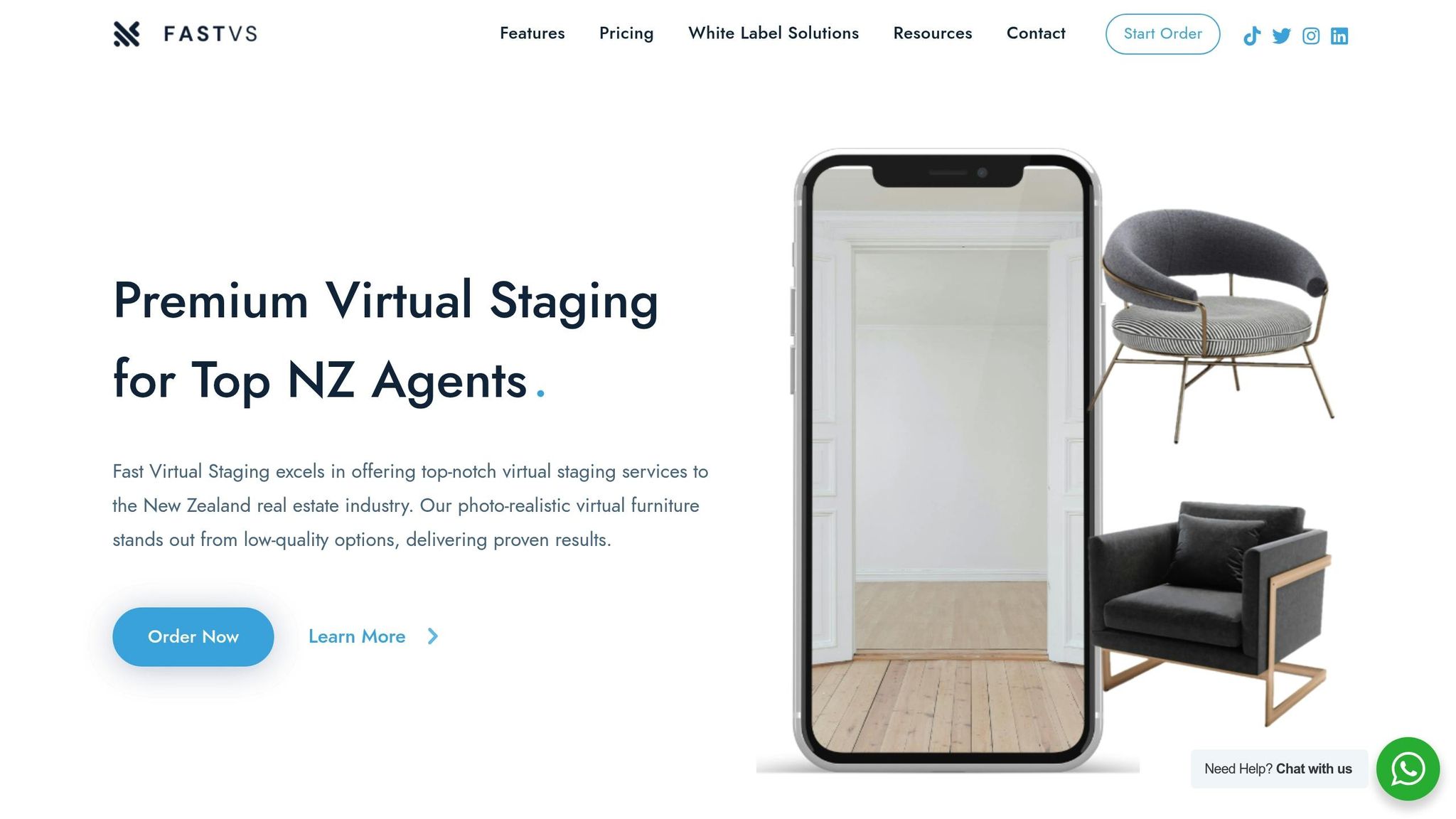
Fast Virtual Staging is a platform tailored to meet the unique needs of New Zealand properties. It specialises in creating photorealistic images that transform empty rooms into warm, inviting spaces, helping buyers envision their future lifestyle.
One of its standout features is the 24-hour delivery guarantee, which is particularly useful for real estate professionals working on tight deadlines, such as those associated with new property launches. At a cost of $35 NZD per image, it’s an affordable option for both single properties and larger developments. The service also includes two free revisions and a personal account manager who understands the nuances of the New Zealand market.
The platform supports staging for both residential and commercial properties, offering a range of design styles, including popular New Zealand aesthetics like Scandinavian and Modern. For real estate photographers and property marketplaces, white-label solutions provide a flexible option, with discounted rates for those integrating virtual staging into their existing services.
The process is straightforward: upload property photos, specify your design preferences, and receive professionally staged images within 12-24 hours. This streamlined system makes it easy to stage both empty homes and unbuilt properties effectively.
Best Practices for Staging Empty or Unbuilt Spaces
When staging new builds or empty properties, it’s essential to highlight the main function of each room while also showcasing its versatility. For instance, a spare room could be staged as both a home office and a guest room to cater to a broader range of buyer needs.
Lighting is crucial in virtual staging. Opt for photos with plenty of natural light, as New Zealand buyers tend to favour bright, open spaces. If you’re working with architectural renders for unbuilt homes, ensure the lighting reflects typical New Zealand residential settings.
Furniture scale is another key consideration. New Zealand homes often feature more compact spaces compared to international properties, so oversized furniture can make rooms feel smaller. Choosing appropriately scaled pieces helps buyers better understand the space’s potential.
Tailor the staging style to the target audience. For example, a sleek, modern look might appeal to young professionals in Auckland apartments, while family homes in Christchurch suburbs could benefit from practical, cosy furnishings that highlight family-friendly features.
Consistency is also important. Maintain a cohesive design approach across all rooms to create a seamless flow. This helps buyers envision how they would move through the space and builds confidence in the property’s layout and design.
How to Communicate Design Preferences Clearly
Clear communication with your staging provider is essential to ensure the final result aligns with your marketing strategy and appeals to your target buyers.
Use specific references to New Zealand design trends when outlining your requirements. Terms like "coastal contemporary", "modern farmhouse", or "urban industrial" are well-understood locally and can guide staging professionals in creating the desired look.
Provide details about the local area to help inform design choices. For instance, Queenstown properties might benefit from alpine-inspired staging, while Wellington apartments could showcase a sleek, urban style suited to the city’s business district.
Highlight any unique features of the property that should be emphasised. Elements like bay windows, high ceilings, or seamless indoor-outdoor flow are attractive selling points and can be accentuated with thoughtful furniture placement.
It’s also important to specify any items to avoid. For example, if you’re targeting families, the staging should include child-friendly elements while still maintaining a sophisticated appeal for adult buyers.
Finally, for high-value properties, consider requesting multiple staging options for key rooms like the living area or master bedroom. This allows you to test different styles and choose the one that resonates most with buyers during your marketing campaign. These thoughtful strategies can help create virtual spaces that truly connect with New Zealand buyers.
sbb-itb-7b8b2a2
Design Strategies for New Zealand Properties
When it comes to virtual staging for New Zealand properties, aligning with local tastes and showcasing each property’s unique charm is key. By tailoring designs to reflect Kiwi preferences, you can boost buyer confidence and enhance the appeal of new builds. Let’s dive into some popular design styles, measurement standards, and buyer-focused staging strategies that resonate with the New Zealand market.
Popular Design Styles in New Zealand Real Estate
New Zealand’s diverse landscapes and lifestyles influence the design styles that appeal most to buyers. Here are a few that stand out:
Coastal Contemporary
Perfect for properties near the coast, this style highlights natural textures and a soothing palette of white, soft blues, and sandy hues. Think linen sofas, driftwood coffee tables, and subtle nautical accents to evoke a relaxed, beachside vibe.
Modern Farmhouse
This style is a favourite in rural and semi-rural areas like Canterbury and Waikato. Combining rustic charm with modern touches, it features elements like exposed beams, shiplap walls, barn doors, and industrial lighting. These details create a warm, functional space that feels right at home in the countryside.
Scandinavian Minimalism
Popular with urban buyers in cities like Auckland and Wellington, this style focuses on clean lines, natural materials, and neutral tones like whites, greys, and warm timbers. It’s ideal for apartments and compact new builds, offering a sense of space and sophistication.
Urban Industrial
Young professionals in city centres are drawn to this edgy style, characterised by exposed brick, steel fixtures, and bold geometric patterns. It’s a natural fit for warehouse conversions or modern apartments in areas like Auckland’s Wynyard Quarter or Wellington’s waterfront precinct.
Choosing the right style for a property isn’t just about aesthetics – it’s about understanding the preferences of local buyers. Research shows that staging tailored to specific demographics creates stronger emotional connections, ultimately increasing a property’s appeal.
Using Metric Measurements and Local Colour Palettes
In New Zealand, room dimensions are typically measured in square metres, so virtual staging should reflect this by ensuring furniture is appropriately scaled to fit local spaces.
Colour also plays a big role in creating the right atmosphere. Warm whites are a popular choice, as they enhance natural light and create an inviting, airy feel. Incorporating natural materials like New Zealand pine or rimu adds a local touch that appeals to buyers who appreciate sustainability and craftsmanship.
Another essential element is the indoor-outdoor flow – a hallmark of Kiwi living. Virtual staging should highlight features like expansive views, seamless transitions to outdoor areas, and coordinated colour schemes that tie the indoors and outdoors together.
Seasonality matters too. For summer, light linens and outdoor dining setups can capture the essence of the season, while winter staging might focus on cosy throws and warm lighting to create a snug and welcoming environment.
Targeting Different Buyer Groups with Tailored Staging
Staging isn’t one-size-fits-all. Different buyer groups have different priorities, and virtual staging can be customised to address these needs:
- Young Professionals (ages 25–35): Highlight modern, low-maintenance living with features like smart storage, home office spaces, and entertainment areas. Tech-friendly touches like charging stations and media centres can also make a big impact.
- Growing Families: Focus on practicality and safety without sacrificing style. Stain-resistant fabrics, rounded furniture edges, and flexible layouts are key. Features like secure balconies and adaptable spaces help parents see the home’s long-term potential.
- Empty Nesters and Retirees: Showcase low-maintenance comfort and accessibility. Single-level layouts, step-free access, and wider doorways are especially appealing to this group.
- Investment Buyers: Emphasise rental potential and durability. Neutral colour schemes, quality fixtures, and versatile layouts make a property attractive to a wide range of tenants.
Virtual staging tools powered by AI make it easier than ever to customise designs. These tools allow for quick adjustments to layouts, colour schemes, and styles, ensuring that properties are always presented in a way that resonates with their target audience.
Ultimately, successful staging in New Zealand comes down to authenticity and functionality. By reflecting local values and addressing specific buyer needs, virtual staging can transform new builds into homes that feel perfectly attuned to Kiwi lifestyles.
Maximising Sales with Virtual Staging in New Zealand
Virtual staging is a game-changer for transforming empty or unfinished spaces into inviting, liveable environments. In New Zealand’s competitive property market, it’s particularly valuable for selling new builds and off-the-plan homes.
Why Real Estate Professionals Are Turning to Virtual Staging
Virtual staging helps potential buyers imagine what life could look like in a property. By turning empty spaces into beautifully furnished rooms, it creates an emotional connection that makes the property more memorable.
It also boosts buyer engagement. Staged properties showcase a lifestyle, not just a space, making online listings more eye-catching and increasing views.
Another major perk? It’s far more affordable than traditional staging. There’s no need to rent furniture, hire movers, or pay for labour. This means agents can stage multiple properties without breaking the bank.
Speed is another big advantage. With virtual staging, you can get stunning, tailored images within 12-24 hours – no waiting around for furniture deliveries. For agents juggling multiple listings, this flexibility allows them to showcase different styles that cater to various buyer preferences.
These benefits make virtual staging an essential tool for real estate professionals looking to stand out and close more deals in a competitive market.
How to Get Started with Virtual Staging
Fast Virtual Staging offers a service tailored specifically for the New Zealand market. For just $35 NZD per image, you can receive photo-realistic virtual renders in as little as 12-24 hours.
The platform offers a range of design styles, from Scandinavian minimalism to coastal contemporary, so agents can choose staging that resonates with their target buyers. Two free revisions are included, along with a dedicated account manager to ensure the final images meet your exact needs.
Getting started is easy: simply upload your property photos, specify your design preferences, and let Fast Virtual Staging handle the rest. This straightforward process removes the hassle of traditional staging, freeing up your time to focus on connecting buyers with their dream homes.
Virtual staging isn’t just a marketing tool – it’s a way to help buyers visualise their future. By bridging the gap between imagination and reality, it drives stronger engagement and better sales results in New Zealand’s ever-changing property market.
FAQs
What are the benefits of virtual staging for new builds and off-the-plan properties in New Zealand?
Virtual staging has become a game-changer for showcasing new builds and off-the-plan properties in New Zealand. It gives potential buyers the chance to imagine how an empty or unbuilt home could look, helping them form an emotional connection to the space. This connection can be a big factor in sparking interest and building confidence, particularly when the property hasn’t yet been constructed.
With lifelike digital furniture arrangements, virtual staging makes properties stand out in a competitive market. Plus, it’s a cost-efficient alternative to traditional staging, saving both time and money. Since staged spaces can be viewed online, it’s a perfect solution for reaching buyers locally and internationally, all without needing a physical setup.
What virtual staging styles are most appealing to New Zealand home buyers?
New Zealand buyers often gravitate towards virtual staging styles that mirror the country’s popular design preferences. Scandinavian minimalism, with its crisp lines, practical design, and bright, open vibe, is a standout choice. Another favourite is modern contemporary, which combines sleek furniture and neutral colours to create a sophisticated yet adaptable aesthetic. Then there’s the ever-popular coastal style, featuring natural materials, muted blues, and earthy shades, perfectly capturing New Zealand’s love for the outdoors and its laid-back, beachy lifestyle.
These staging choices do more than just fill empty spaces – they help buyers imagine the possibilities, making properties feel warm, welcoming, and in tune with Kiwi sensibilities.
How does virtual staging influence how quickly a property sells and the price it achieves?
Virtual staging can significantly shorten the time a property stays on the market. Homes that are staged often sell much faster than those left empty – sometimes within weeks instead of dragging on for months. Why? Because a well-furnished, inviting space makes it easier for potential buyers to picture themselves living there.
It’s not just about speed, though. Virtual staging can also boost sale prices. Properties that look appealing and polished tend to draw more interest and competitive offers, often selling for 5–10% more than their vacant or unfurnished counterparts. For sellers in New Zealand, this translates to not just a faster sale, but also a better return.