
In 2026, selling a home in New Zealand often starts online, making how you present your property crucial. Virtual staging and home staging are two popular methods, each serving different purposes:
- Virtual Staging: Digital furniture and décor are added to photos of empty rooms. It’s fast (24-hour turnaround), affordable (about $35 NZD per image), and great for drawing attention online. Listings with virtual staging see 90% higher click-through rates and sell faster (29–31 days on average).
- Home Staging: Real furniture is physically arranged in the property for in-person viewings. It costs more (starting at $1,500 NZD) but creates a stronger emotional connection during open homes, especially for luxury homes.
Quick Tip: Virtual staging works best for online listings and empty properties. Home staging is ideal for high-value homes or when buyers need to physically experience the space. Many sellers now combine both methods to maximise results.
Quick Comparison
| Feature | Virtual Staging | Home Staging |
|---|---|---|
| Cost | $35 NZD per image | From $1,500 NZD |
| Turnaround Time | 24 hours | 5+ days |
| Best For | Online listings, empty homes | High-end homes, open homes |
| Impact | Boosts online interest | Strengthens in-person appeal |
For most sellers, virtual staging is a cost-effective way to stand out online, while home staging is better for creating a lasting impression during viewings. A hybrid approach can help you get the best of both worlds.
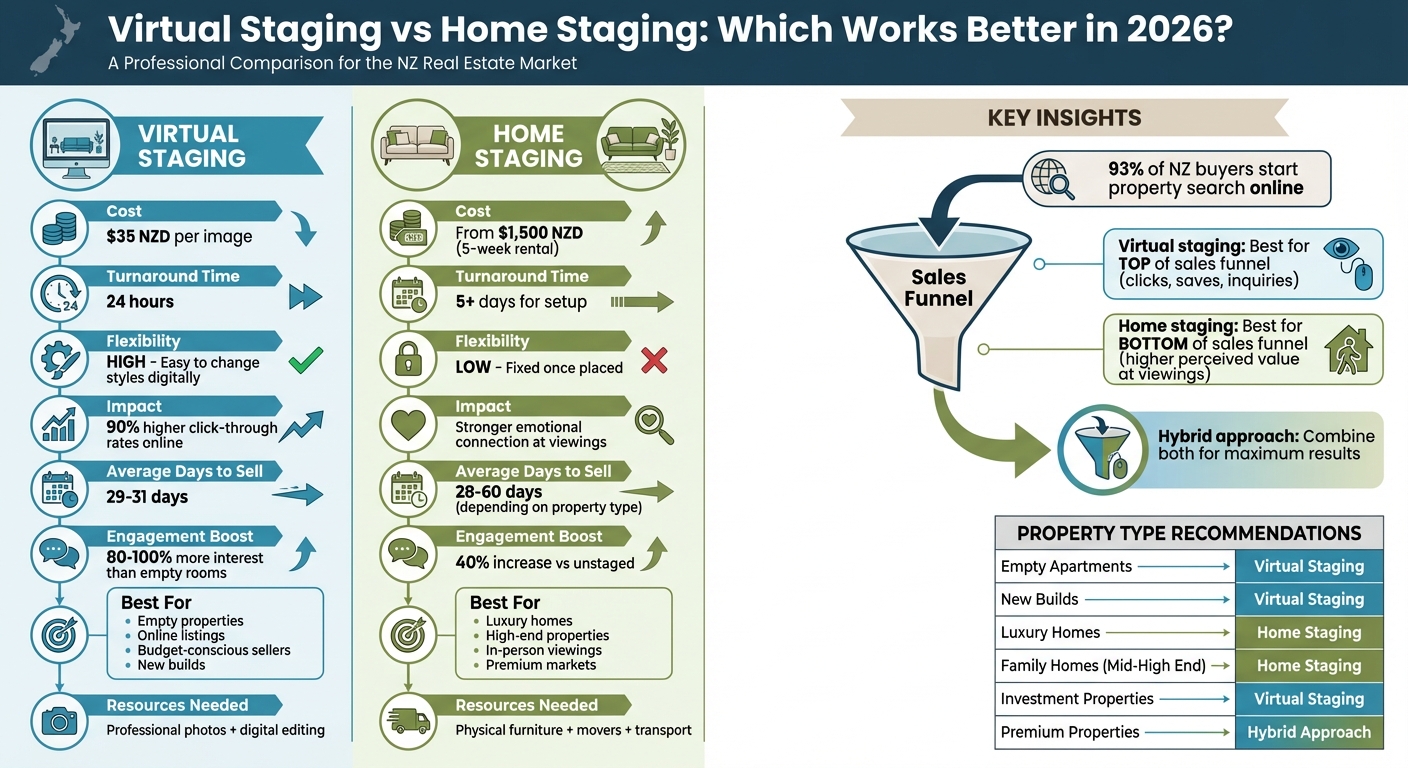
Virtual Staging vs Home Staging in New Zealand 2026: Cost, Speed & Effectiveness Comparison
Home Staging in 2025: Physical vs Virtual Staging (and the Cost of Doing Nothing)
sbb-itb-7b8b2a2
What is Virtual Staging?
Virtual staging is a digital technique that transforms photos of empty properties by adding lifelike furniture, décor, and accessories. Instead of physically furnishing a home, designers use specialised 3D rendering software to overlay these elements onto images. The outcome? Highly realistic visuals that help potential buyers imagine how the space could look.
Modern virtual staging relies on advanced rendering technology to ensure the furniture and décor appear naturally within the room. Details like lighting, shadows, and textures – whether it’s the smooth finish of leather or the grain of a wooden table – are rendered with precision. This attention to detail is especially important in New Zealand’s property market, where online listings often shape a buyer’s first impression.
The process is simple for real estate professionals: take photos of the empty property and upload them to a virtual staging service. Designers then add furnishings that complement the home’s style and appeal to the target market. Within 12–24 hours, the enhanced images are ready, allowing listings to go live quickly. This efficiency makes virtual staging an attractive option for showcasing properties effectively.
Key Features of Virtual Staging
Speed and Cost-Effectiveness
Virtual staging is a fast and affordable alternative to traditional staging. Services like Fast Virtual Staging charge $35 NZD per image and deliver results within 12–24 hours. They also include two free revisions to ensure the design meets expectations. Compared to physical staging – which can take days to arrange – this approach saves both time and money.
Digital Versatility
Since the process is entirely digital, it’s easy to experiment with different styles or layouts. For instance, a spare room can be reimagined as a home office or a nursery with minimal extra effort or expense. This flexibility allows sellers to present the property in ways that appeal to various buyer needs.
Benefits of Virtual Staging
Virtual staging significantly boosts buyer engagement. Staged images generate 80–100% more interest than photos of empty rooms, outperforming the 40% engagement increase seen with traditional staging. This makes it a powerful tool for drawing attention to listings, encouraging saves, and driving inquiries on property platforms.
Another advantage is its adaptability across different property types. Whether it’s a compact city apartment or a sprawling rural home, virtual staging can be tailored to suit the space, with listings often ready the same day. In New Zealand’s competitive 2026 property market, this quick turnaround is a major benefit.
Tailored for Local Appeal
Virtual staging also allows for customisation to match local preferences. For example, a beachside home in Mount Maunganui might feature relaxed Coastal décor, while a sleek, modern aesthetic could be used for an Auckland city apartment. This ability to align with buyer expectations ensures the property visuals resonate with the intended audience.
What is Home Staging?
Home staging is all about preparing a property for sale by arranging real furniture, décor, and lighting to showcase its best features and attract a broad range of buyers. Unlike virtual staging, this approach uses physical elements to create an environment buyers can experience in person, helping them visualise living in the space.
By 2026, home staging has become more than just tidying up – it’s a strategy designed to tell a story. For example, a spare bedroom might be styled as a home office to appeal to remote workers or transformed into a nursery to attract young families. This approach helps buyers imagine the home’s potential beyond its floor plan. Companies like The Look operate in cities such as Auckland, Wellington, and Christchurch, crafting these lived-in experiences.
"You have three seconds to get people’s attention on websites or social media… you need to give your listing the best chance of getting people physically through the door."
- Linda Fogarty, Canterbury and West Coast Sales Manager at PGG Wrightson Real Estate
How Home Staging Works in New Zealand
The process starts when a homeowner or real estate agent contacts a staging company. The stagers assess the property, recommend suitable furniture and décor for the target market, and physically set everything up. In New Zealand, staging packages typically cost around $1,500 NZD for a standard five-week rental period. This fee includes delivery, installation, and removal, with options to extend if the property stays on the market longer. The investment often pays off, with an average return of 5 to 10 times the initial cost.
Coordination between the staging company, agent, and homeowner is key. Stagers often apply the "30% Rule", removing excess items to create more visual space while leaving a few carefully chosen pieces to make the space feel inviting. These streamlined methods ensure staged homes stand out in the competitive property market.
Advantages of Home Staging
In New Zealand’s property market, home staging has a clear edge. It allows buyers to experience the flow and scale of a property in a way photos simply can’t match. This is especially important for mid- to high-end homes, where emotional appeal often drives purchasing decisions.
Staged homes consistently sell faster across all property types. Data from The Look and local agents highlights the difference staging makes:
| Property Type | Days on Market (Unstaged) | Days on Market (Staged) |
|---|---|---|
| Inner-city Apartment | 45 | 28 |
| Suburban Family Home | 60 | 35 |
| Executive Home | 90 | 60 |
In addition to faster sales, staged homes often attract better offers and face fewer objections during negotiations. Staging also boosts online engagement, which is crucial since over 93% of New Zealand buyers start their property search online. A staged home’s photogenic appeal can be the difference between a casual scroll and a booked inspection.
"This has by far been the best money I have spent on the house and it makes the house look like a million dollar property."
- Homeowner Wick
Virtual Staging vs Home Staging: Direct Comparison
When comparing virtual staging to traditional home staging, the differences go beyond just the price tag. They influence how quickly you can market your property, the type of buyers you attract, and the stage of the sales process where each method shines.
Virtual staging is ideal for creating that initial buzz online. It grabs attention at the top of the sales funnel, helping your listing stand out and driving more clicks and enquiries. On the other hand, home staging takes over once the buyer shows interest, turning curiosity into serious offers by creating an inviting, in-person experience. Each method serves a distinct purpose in the selling journey.
A growing trend among sellers today is combining both methods. Virtual staging draws buyers in online, while home staging seals the deal during open homes. This hybrid approach works well because most buyers start their search digitally but still want to feel the space in person before making a decision. This strategy is especially relevant in New Zealand’s 2026 property market, where balancing cost and buyer engagement is key.
Here’s a quick breakdown of how the two methods stack up:
Comparison Table
| Feature | Virtual Staging | Home Staging (Traditional) |
|---|---|---|
| Cost | $35 NZD per image | From $1,500 NZD |
| Turnaround Time | 24 hours | 5+ days for setup |
| Flexibility | High (styles can be digitally altered, e.g. Modern, Scandi, Industrial) | Low (furniture stays fixed once placed) |
| Primary Impact | Elevates online listings and social media visibility | Enhances in-person viewings and open home appeal |
| Required Resources | Professional photos and digital editing tools | Physical furniture, movers, and transport |
| Best For | Empty apartments, new builds, lower-budget properties | High-end homes, family residences, luxury listings |
| Buyer Experience | Provides a digital "wow" factor with customisable styles | Delivers an emotional, "ready-to-move-in" atmosphere |
It’s important to disclose when images have been virtually staged. This transparency helps manage buyer expectations and avoids any disconnect between online images and the real property.
Effectiveness and Sales Impact in New Zealand 2026
By 2026, New Zealand’s property market is firmly rooted in an online-first approach. Platforms like Trade Me Property and Realestate.co.nz dominate the discovery process, with buyers forming emotional impressions in as little as three seconds after seeing the first listing image. That means a standout hero shot can make or break enquiry rates.
Virtual staging has proven to be a game-changer at this crucial stage. It doesn’t just boost engagement metrics – it actively converts casual browsers into serious enquirers. These listings see higher click-through rates and more property saves, which ultimately lead to increased viewing bookings. On the other hand, physical staging shines when it comes to turning those viewings into offers, creating an emotional connection during in-person inspections. This balance highlights the value of a hybrid strategy that combines the strengths of both approaches to maximise impact throughout the sales funnel.
"In 2026, virtual staging sells better at the top of the funnel (more clicks, saves, inquiries), while physical homestaging sells better at the bottom of the funnel (higher perceived value during viewings)." – HomestagingKI
The most effective strategy combines the two. Virtual staging can craft a polished, emotionally engaging first impression online, while light physical styling – like adding rugs, cushions, or artwork – enhances in-person viewings. This approach caters to both the fast-paced digital market and the trust-building expectations of Kiwi buyers.
Case Studies and Trends
Examples from Auckland and Waikato illustrate how this hybrid approach is being applied. In Auckland’s competitive apartment market, agents are increasingly turning to virtual staging for new builds and vacant units. For under $200 NZD, a three-bedroom townhouse can be virtually staged, with images ready in just 24 hours. This allows agents to list properties immediately, avoiding delays tied to furniture delivery.
In Waikato, virtual staging is gaining traction for rural lifestyle blocks and investment properties, where physical staging logistics can be tricky. Agents report that virtually staged listings see higher engagement on social media, which translates to better attendance at open homes. However, transparency is key – listings must clearly disclose that images have been digitally enhanced to avoid disappointing buyers with a "photo-to-reality gap".
For premium family homes in suburbs like Remuera and Herne Bay, physical staging remains the go-to option. Buyers in these areas expect a fully furnished, move-in-ready experience. The tactile appeal justifies the cost, with physical staging investments often exceeding $3,000 for these high-value properties.
Cost Analysis
When weighing up the costs of staging methods in New Zealand, the difference between virtual and traditional staging is striking. Virtual staging comes with a one-off cost of around $35 NZD per image, offering reusable visual assets for the entire listing period. In contrast, physical staging costs anywhere from $1,500 to $3,000+ NZD, depending on the size of the property and rental duration. For a typical three-bedroom home needing five staged room images, virtual staging would cost approximately $175 NZD, while traditional staging could easily surpass $2,500 NZD once you account for furniture rental, delivery, setup, and a five-week rental period.
Another key distinction is how costs accumulate over time. Physical staging involves ongoing weekly rental fees if the property remains unsold, which can quickly inflate the overall expense. Virtual staging avoids this entirely – it’s a one-time investment per image, and the images can be reused for as long as the property is on the market.
Cost Comparison
| Feature | Virtual Staging | Traditional Home Staging |
|---|---|---|
| Cost Per Room | ~$35 NZD per image | $1,500–$3,000+ NZD total |
| Logistics | Digital processing only | Furniture rental, movers, and setup |
| Turnaround Time | 24–48 hours | Several days for planning and installation |
| Ongoing Fees | None (one-off per image) | Weekly rental fees after initial period |
| Scalability | Easy to add rooms or change styles | Costs increase significantly with additional furniture |
| Best For | Budget listings, empty rentals, multiple properties | High-end luxury homes, open homes |
This comparison highlights why virtual staging is a practical choice for sellers focused on cost efficiency, while traditional staging still holds value for premium properties.
For sellers working within tight budgets, virtual staging offers the flexibility to focus on "hero rooms" like the living room or master bedroom – spaces that are most likely to capture potential buyers’ attention online. This targeted approach works well for entry-level apartments or investment properties where spending over $2,000 on staging could strain the budget. Virtual staging is also a smart solution for developers juggling multiple properties, as its per-image pricing is scalable without the logistical challenges of managing furniture deliveries at multiple sites.
Ultimately, the affordability, speed, and ease of virtual staging make it a compelling option for many New Zealand sellers, particularly in 2026.
Best Use Cases for Each Method in New Zealand
As highlighted in the comparison, the choice between virtual and traditional staging comes down to the type of property, your budget, and how you plan to market it.
When to Choose Virtual Staging
Virtual staging works best for vacant properties with empty rooms that need a quick visual transformation. It’s a great option for fast listings where eye-catching digital enhancements can grab buyers’ attention online. For example, in competitive markets like Auckland, this method can help listings stand out by showcasing the potential of a space, even when the property itself is unoccupied or outdated.
This approach is especially helpful for rooms like bedrooms, where buyers often wonder about furniture placement – like whether a king-size bed would fit comfortably. Developers handling multiple properties can also benefit since virtual staging allows for cost-effective and rapid customisation across several listings. It’s a powerful tool for refreshing older interiors or improving the appeal of poor-quality photos, making it easier to attract interest quickly.
However, for situations where buyers need a physical, hands-on experience, traditional staging is the better choice.
When to Choose Home Staging
Home staging shines when creating a tangible, in-person experience is crucial. This makes it ideal for luxury homes or properties with unique layouts. Buyers can walk through the space, sit on the furniture, and feel the textures, giving them a real sense of how the home functions and feels. This tactile interaction often builds confidence and helps justify higher asking prices, particularly in premium properties.
For older homes or those with unconventional layouts, traditional staging can highlight the property’s functionality and livability in ways digital images simply can’t replicate. It brings the space to life, helping potential buyers imagine themselves living there.
Which Works Better in 2026? Final Recommendations
Final Recommendations
Based on the comparisons we’ve explored, here are some tailored suggestions for New Zealand’s property market in 2026.
For the majority of property listings in New Zealand, virtual staging stands out as the go-to option. It’s faster, more cost-effective, and designed to boost online engagement. Since most Kiwi buyers start their property search online, creating a strong first impression is critical – and virtual staging delivers this without the logistical challenges of physical staging.
That said, physical staging still has its place, especially for premium properties where buyers expect a polished, ready-to-move-in feel. High-end homes often benefit from the emotional connection that traditional staging can create, justifying higher price tags. While virtual staging excels in generating online interest, physical staging shines during in-person viewings, where the emotional impact can seal the deal.
A hybrid approach is also gaining traction for high-value properties. Sellers can use virtual staging to create stunning online visuals and then add select physical elements – like rugs or artwork – during open homes. This strategy ensures the digital appeal is matched by an equally impressive in-person experience, striking the perfect balance between online and offline expectations.
For standard residential properties, empty homes, or sellers on a tight budget, virtual staging is the clear winner. It’s reliable, flexible, and allows sellers to experiment with different styles to attract specific buyer groups – something that’s often too costly with physical staging. Services like Fast Virtual Staging, with their 24-hour turnaround and two free revisions at just NZ$35 per image, make professional staging affordable for nearly every listing.
FAQs
Will virtual staging mislead buyers at open homes?
Virtual staging can be a helpful tool for drawing attention to online property listings, as long as it’s used responsibly. The key is to avoid making changes that drastically differ from the property’s actual appearance. Sellers and agents should always disclose when images have been digitally enhanced, keeping things transparent. By pairing virtual staging with in-person inspections, buyers can gain a clear and honest perspective of the property, which helps build trust.
How many photos should I virtually stage for best results?
Virtually staging 3 to 5 photos of important spaces, like key rooms or exterior views, can make a big impact. This approach showcases the property’s potential, helping to grab buyers’ attention and spark their interest.
When is a hybrid staging approach worth it?
A hybrid staging approach blends the strengths of virtual and traditional staging, making it an excellent choice for boosting sales. Virtual staging is a cost-effective way to grab attention online, while physical staging helps create a strong emotional connection during in-person viewings. This strategy is particularly effective in competitive markets or when catering to a variety of buyer preferences, combining the speed and affordability of virtual staging with the tangible appeal of physically staged spaces, especially in key rooms or high-end properties.