
When selling a property in New Zealand, you can choose between virtual staging (digitally enhancing photos) or physical staging (furnishing the property). Both aim to make homes more appealing, but they differ in cost, time, and buyer experience.
- Virtual staging is affordable at about $35 NZD per image, with delivery in 12–24 hours. It’s ideal for online listings, offering flexibility in design styles and reusable digital assets.
- Physical staging costs between $1,500–$2,500 NZD for 4–5 weeks for a standard home, with setup taking 7–14 days. It creates an emotional connection during in-person viewings but requires higher investment and logistics.
Key takeaway: Virtual staging is cost-effective and fast for online marketing, while physical staging is better for high-value homes needing in-person appeal.
Quick Comparison
| Feature | Virtual Staging | Physical Staging |
|---|---|---|
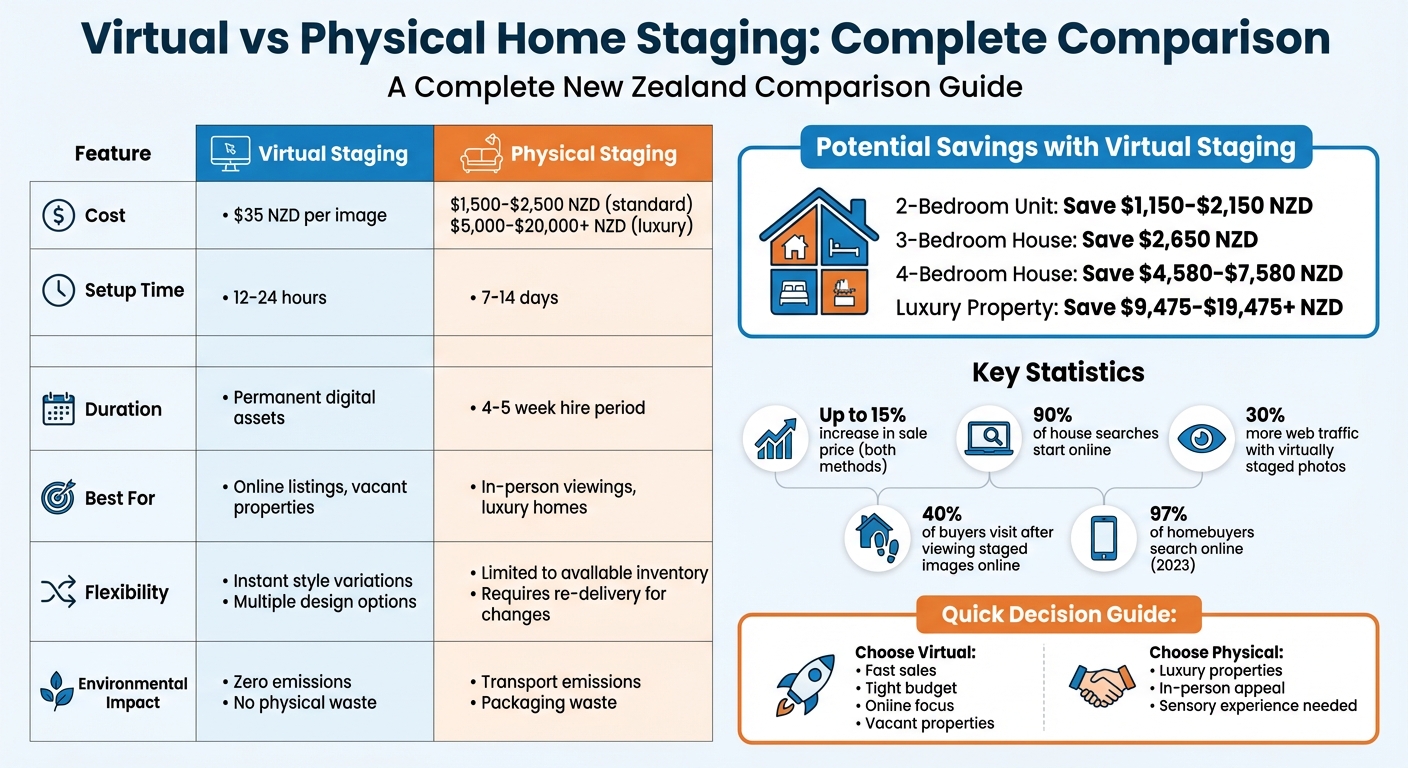
| Cost | $35 NZD per image | $1,500–$20,000+ NZD |
| Setup Time | 12–24 hours | 7–14 days |
| Duration | Permanent digital assets | 4–5 weeks |
| Best For | Online listings | In-person viewings |
Virtual staging suits vacant homes and fast sales, while physical staging works for luxury properties or creating a sensory experience during open homes. Both methods can increase sale prices by up to 15%, so choose based on your needs and budget.
Virtual vs Physical Home Staging: Cost, Time and Impact Comparison
Home Staging in 2025: Physical vs Virtual Staging (and the Cost of Doing Nothing)
Cost Comparison: Virtual vs Physical Staging
Virtual staging offers a much more budget-friendly alternative to physical staging, making it easier to manage costs while aiming for a better return on investment.
Virtual Staging Costs
Virtual staging operates on a straightforward per-image pricing system. For as little as $35 NZD per image, you only pay for the photos you choose to have digitally enhanced. This price is all-inclusive – there are no extra charges for delivery, setup, or labour. Once purchased, these images can be reused for as long as the property is listed.
This clear pricing structure makes planning simple. For example, staging five rooms across ten photos would cost $350 NZD total. Want to showcase the same space in different styles? Each variation will cost the same flat rate per image.
Physical Staging Costs
Physical staging, on the other hand, requires a much larger financial outlay. In New Zealand, the typical cost for a standard staging package ranges from $1,500 to $2,500 for a four-to-five-week hire period. This fee includes furniture and decor rental, delivery, professional setup, and removal.
For larger or more luxurious properties, the costs rise significantly. High-end staging can range from $5,000 to $20,000+, depending on the size of the property and the quality of the furnishings. Dan O’Connor, Managing Director of The Look, explains:
"The average three-bedroom property costs around $3,000 to stage, but in some cases it could go up to $10,000 or $15,000… Prices are for a five-week period".
In addition to these base costs, most staging companies require an upfront deposit, with the remaining balance due after installation. If the property doesn’t sell within the initial hire period, extension fees apply. Sellers may also face extra expenses for storage units to hold their own furniture, professional cleaning before staging, and repairs if the staging furniture causes any damage.
Cost Comparison Table
| Property Type | Virtual Staging (10 images) | Physical Staging (4-5 weeks) | Potential Savings |
|---|---|---|---|
| 2-Bedroom Unit | $350 NZD | $1,500 – $2,500 NZD | $1,150 – $2,150 NZD |
| 3-Bedroom House | $350 NZD | $3,000 NZD | $2,650 NZD |
| 4-Bedroom House | $420 NZD (12 images) | $5,000 – $8,000 NZD | $4,580 – $7,580 NZD |
| Luxury Property | $525 NZD (15 images) | $10,000 – $20,000+ NZD | $9,475 – $19,475+ NZD |
The savings are hard to ignore, especially considering that virtual staging provides permanent assets – your digitally staged photos can be used indefinitely, no matter how long it takes to sell the property. Physical staging, by contrast, is limited to a set period, with additional fees for extending the contract.
Next, we’ll look at how quickly these two staging methods can be completed.
Time Comparison: Virtual vs Physical Staging
Timing plays a crucial role when deciding between virtual and physical staging. Virtual staging offers a much quicker turnaround, typically delivering results within 12 to 24 hours. In contrast, physical staging requires more preparation and can take 7 to 14 days from start to finish. This speed difference can be a game-changer for getting properties listed online quickly.
Virtual Staging Turnaround Times
Virtual staging is incredibly fast, often providing high-resolution results within 12 to 24 hours. The process is fully digital: upload images of empty rooms, choose a room type and design style, and receive ready-to-use renders. With AI-powered tools, furnished room images can be created in seconds, while video renders take about 10 minutes.
If adjustments are needed, virtual staging services typically include two free revisions. The digital nature of the process eliminates delays caused by furniture delivery or on-site arrangements.
On the other hand, physical staging requires significantly more time and coordination.
Physical Staging Timelines
Physical staging involves multiple steps that extend the timeline. First, you’ll need to gather quotes from staging companies, review their furniture options, and work with your real estate agent to decide which rooms to stage. After finalising the details, the staging company schedules furniture delivery, transports the items, and arranges them on-site. This entire process usually takes 7 to 14 days.
In New Zealand, the standard furniture hire period for physical staging is four to five weeks. This timeframe includes the initial setup and styling of the property, ensuring it remains staged throughout the marketing period.
Time Comparison Table
Here’s a quick breakdown of the key differences between virtual and physical staging in terms of time and flexibility:
| Staging Method | Planning & Setup Time | Standard Duration | Flexibility for Changes |
|---|---|---|---|
| Virtual Staging | 12–24 hours | Permanent digital assets | Instant style variations |
| Physical Staging | 7–14 days | 4–5 week hire period | Requires re-delivery and manual re-arrangement |
The speed of virtual staging is particularly beneficial in fast-moving property markets, where agents aim to sell homes within 28 days. With 90% of house searches starting online, having professionally staged images ready in under a day ensures your listing can grab buyers’ attention right away – without the delays tied to physical furniture logistics.
Impact on Buyer Interest and Property Sales
According to Trade Me’s Ben Tutty, "good presentation can add as much as 10 to 15% to the eventual sale price of a home". For a $1,000,000 property in New Zealand, this translates to a potential increase of $100,000 to $150,000. While both virtual and physical staging can elevate property values, they achieve this in different ways. Let’s break down how each method enhances buyer engagement, both online and in-person.
How Virtual Staging Performs Online
Virtual staging shines in the digital realm, transforming plain property listings into visually appealing experiences. By turning empty rooms into inviting, "move-in ready" spaces, it grabs attention during online browsing. High-quality, photorealistic images help potential buyers better understand room dimensions, lighting, and layout options – details that often get lost in photos of empty spaces.
One standout feature of virtual staging is its versatility. Real estate agents can display the same property with a variety of interior styles – like Scandinavian, Modern, Industrial, or Coastal – to capture the interest of different buyer groups. This ability to cater to diverse tastes makes virtual staging a powerful tool for increasing online engagement.
How Physical Staging Works In-Person
While virtual staging excels online, physical staging creates a deeper connection during in-person viewings. Walking through a staged home allows buyers to experience the space on a personal level. As real estate expert Greg Harrelson explains, buyers should feel "welcomed and envision themselves living in the space. This emotional connection is what ultimately leads to a successful sale".
Physical staging uses tactile details – like soft textures, warm lighting, and well-placed furniture – to help buyers picture everyday moments. Whether it’s imagining a family movie night in the lounge or a quiet breakfast by a sunlit window, these elements make the home feel lived-in and inviting. Ben Tutty also points out that "a staged home photographs better and comes across better during open homes", highlighting its dual benefits for both digital and face-to-face marketing.
Real Examples from New Zealand Properties
In New Zealand, physical staging often focuses on high-impact areas like the living room, kitchen, and master bedroom – spaces where buyers spend the most time during viewings. Real estate agents work closely with professional stagers to maximise the return on investment by prioritising these key areas.
On the other hand, virtual staging offers a cost-effective solution by eliminating the need for renting furniture while still maintaining strong online appeal. Many agents find success by combining both approaches: virtual staging to draw buyers in through digital listings and physical staging to solidify that interest during open homes. This blended strategy ensures maximum buyer engagement and emotional impact.
sbb-itb-7b8b2a2
Flexibility and Design Options: Virtual vs Physical
Design Freedom with Virtual Staging
Virtual staging breaks free from the constraints of traditional staging. With digital tools, a single property can be presented in a variety of styles – whether it’s Scandinavian, Industrial, Bohemian, Coastal, or Luxury. This means a downtown Auckland apartment could be showcased in both sleek modern designs and warm, traditional layouts, appealing to a broader audience [4, 19].
The customisation doesn’t stop at furniture styles. Virtual staging allows precise control over materials like natural wood, marble, concrete, or brushed metals, as well as an array of textiles. It’s also incredibly effective for tricky spaces – small or awkwardly shaped rooms can be instantly reimagined with layouts that include multifunctional furniture, which might be nearly impossible to source and set up physically.
Physical Staging Limitations
Physical staging, on the other hand, comes with its own set of challenges. Stagers are restricted to the inventory they have on hand, which limits the variety of styles they can offer [4, 19]. As Ben Tutty from Trade Me points out:
"strange or polarising furniture might turn people off".
This makes the choice of furniture and decor critical, as it remains fixed for the duration of the listing.
Logistics also pose significant hurdles. Furniture must fit through doorways and match room dimensions, which isn’t always straightforward. Unlike virtual staging, which can adjust designs to scale effortlessly, physical staging demands movers, delivery trucks, and meticulous coordination to avoid damaging the property. Once the furniture is in place, making changes requires another round of deliveries and labour, potentially adding days or even weeks to the process. In comparison, virtual staging offers unmatched convenience – styles and layouts can be updated with just a few clicks, making it far more adaptable than its physical counterpart [4, 19].
Environmental and Practical Considerations
Environmental Benefits of Virtual Staging
Virtual staging offers a greener alternative by cutting out the environmental toll associated with moving and storing furniture. Without delivery vans, moving crews, or large trucks, transport emissions are significantly reduced. Additionally, it eliminates waste from packaging materials like plastic wrap and cardboard or the disposal of old furniture. Since it operates entirely in the digital space, there’s no need for energy-draining warehouses – only minimal cloud computing power is required. Once created, virtually staged images can be reused or updated as needed, without adding any further environmental strain. These eco-friendly perks stand in contrast to the physical staging process, which involves tangible resources and logistics.
When Physical Staging Makes Sense
Despite the clear environmental advantages of virtual staging, physical staging still holds an important place, especially when creating a sensory experience is key. Luxury properties, in particular, benefit from letting potential buyers physically interact with materials, test the comfort of furniture, and experience the layout firsthand.
Physical staging also shines during open homes, where real furniture helps create a warm and inviting atmosphere that encourages buyers to imagine living in the space. Statistics show that around 40% of buyers visit properties after viewing staged images online. For homes with outdated interiors or unappealing furniture, physical staging ensures that the in-person experience matches the polished look seen in online listings. In New Zealand, where outdoor spaces like decks and courtyards are highly prized, using real furniture in these areas can enhance curb appeal and help buyers envision how they might use these spaces.
When to Use Fast Virtual Staging
What Fast Virtual Staging Offers
Fast Virtual Staging stands out for its speed and affordability. At just $35 NZD per image, you get photorealistic digital renders delivered within 12–24 hours. Plus, the service includes two free revisions, so you can tweak the designs until they perfectly match your vision. Whether it’s a residential or commercial property, you can choose from a range of design styles – modern, Scandinavian, farmhouse, or industrial – to complement the property’s architecture and attract the right buyers.
The service goes a step further by assigning you a personal account manager to guide you through the process. For white-label partners, bulk order discounts sweeten the deal. What’s more, the digital assets are versatile – you can use them across platforms like Trade Me, Realestate.co.nz, social media, and print media, all without incurring additional fees. Fast Virtual Staging shines in situations where traditional staging may not be practical or cost-effective.
Best Use Cases for Virtual Staging
Virtual staging is particularly useful for vacant properties, where empty spaces can make it hard for potential buyers to visualise how the rooms could be used. Compared to physical staging, virtual staging offers a much more budget-friendly solution, especially for listings that need to look appealing without breaking the bank. It’s perfect for fast-turnaround sales, properties with outdated or polarising décor, and new builds or renovations that need to feel more inviting.
With 97% of homebuyers searching online in 2023, virtual staging becomes even more impactful. Listings with virtually staged photos can see 30% more web traffic than those with vacant room photos. To maximise engagement, focus on staging high-traffic rooms like the living room, kitchen, and primary bedroom. And don’t forget to include a disclaimer in your listing description to maintain transparency with potential buyers.
Conclusion
Virtual and physical staging offer two distinct ways to present properties. In New Zealand, physical staging typically costs between $1,500 and $2,500 for a four-week period. It requires significant planning and coordination but aims to create a strong emotional connection during in-person open homes.
On the other hand, virtual staging digitally transforms empty spaces into fully furnished rooms almost instantly. It provides photorealistic results at a fraction of the cost, making it particularly effective for enhancing online listings. This quick turnaround is especially important in a market where online visibility drives early buyer interest.
Both staging methods have been shown to potentially increase sale prices by up to 15%. Choosing the right option often depends on the property’s specific needs. Physical staging works best for high-value homes where in-person viewings are key, while virtual staging is ideal for vacant properties and situations requiring swift online marketing.
Looking at the cost and time factors, virtual staging often stands out for its efficiency. For instance, Fast Virtual Staging offers a practical solution in New Zealand’s real estate market. At $35 NZD per image, with a delivery time of 12–24 hours, it provides an affordable and flexible way to showcase properties. This service allows listings to feature multiple design styles without the hassle of managing furniture rentals, making it easier to attract attention on platforms like Trade Me and Realestate.co.nz.
For many New Zealand properties, virtual staging provides the speed, cost-effectiveness, and visual appeal needed to generate strong buyer interest quickly.
FAQs
What makes virtual staging a better option than physical staging?
Virtual staging has become a go-to solution for real estate professionals and homeowners in New Zealand, offering a range of advantages over traditional physical staging. One of the standout benefits is its affordability. With prices typically between NZ$25 and NZ$65 per image, virtual staging is a fraction of the cost of physical staging, which can range from NZ$1,500 to NZ$5,000 or more. This makes it especially appealing for showcasing vacant homes or investment properties.
Another key benefit is the speed of the process. Virtual staging can often be completed within 24 to 48 hours, making it ideal for meeting tight deadlines or quickly updating online listings. On top of that, it’s easy and convenient – no need to move heavy furniture, worry about damaging decor, or deal with the logistics of setting up and removing items.
It’s also worth noting that virtual staging aligns with New Zealand’s increasing focus on sustainability. By eliminating the need for physical furniture and reducing waste, it provides an eco-conscious alternative for enhancing property appeal.
These advantages make virtual staging a practical and visually compelling choice, particularly for attracting online or overseas buyers.
What are the benefits of virtual staging for online property listings?
Virtual staging is a clever way to make online property listings more appealing by showcasing spaces at their best. Through the use of digital tools, furniture and décor are added to photos, turning empty or outdated rooms into warm, stylish environments. This helps potential buyers visualise the possibilities of the space.
One of the key benefits is its affordability and speed. Unlike traditional staging, virtual staging can often be completed within 12–24 hours, allowing real estate agents and homeowners to refresh listings quickly. Eye-catching, professionally designed images not only grab attention but also increase the chances of faster sales and potentially higher offers. It’s a smart, efficient method to boost the visibility and appeal of your property online.
When is it better to choose physical home staging over virtual staging?
Physical home staging often shines when creating a deep emotional connection with potential buyers is the goal. This method is particularly effective for luxury homes, family-focused properties, or homes that attract a lot of open-home visitors. By incorporating real furniture and décor, physical staging gives buyers the chance to experience the space firsthand, making it easier for them to imagine living there.
It’s especially useful for highlighting a property’s actual size, layout, and textures – details that virtual staging might not fully convey. For high-end homes or spaces that benefit from a polished, luxurious presentation, the tangible experience of physical staging can leave a memorable impression. While virtual staging is a budget-friendly and efficient option for online listings, physical staging stands out when an in-person impact is essential to sealing the deal.