
Virtual staging is transforming how homes are sold in New Zealand. It’s a cost-effective way to digitally furnish empty rooms, helping buyers visualise a property’s potential. With 90% of buyers starting their search online and 97% prioritising listing photos, this approach is gaining traction across the country. Here’s why:
- Affordable: Virtual staging costs as little as NZ$35 per image, compared to over NZ$2,000 for traditional methods.
- Effective: Staged homes attract 87% more views, 48% more inquiries, and sell up to three times faster.
- Customisable: Tailored designs suit different architectural styles and buyer preferences.
- Higher Returns: Staging can increase sale prices by 5–10%, delivering strong returns on investment.
Easy low cost virtual staging for real estate photography
How Virtual Staging Improves Property Listings
Virtual staging is changing the game for property listings in New Zealand, offering a smart way to make homes more appealing to potential buyers. By digitally adding furniture and decor to empty spaces, it helps buyers picture themselves living in the property. This approach enhances visual impact, saves costs, and boosts online engagement.
Bringing Life to Listings with Photo-Realistic Images
One of the biggest advantages of virtual staging is how it transforms empty rooms into inviting spaces. Bare rooms often feel cold and smaller than they actually are, making it tough for buyers to imagine their potential. Virtual staging solves this by creating photo-realistic images that showcase the space in its best light.
Today’s technology produces lifelike images that help buyers form an emotional connection with a property – an essential step in turning online interest into real-world action.
"The power of virtual staging is that it can transform an empty, lifeless space into a dream home that potential buyers can envision themselves living in." – Style & Structure
This emotional connection is critical, especially since over 93% of buyers start their property search online . Properties featuring professionally staged images attract up to 118% more views than those with empty rooms, proving the importance of a polished presentation.
Virtual staging also highlights a property’s unique features. A large living room can be enhanced with thoughtfully arranged furniture, while awkward nooks can be reimagined as functional spaces, helping buyers see the full potential of the home.
A Cost-Effective Alternative to Traditional Staging
Beyond its visual appeal, virtual staging is a far more affordable option compared to physical staging. Services like Fast Virtual Staging deliver high-quality results for just NZ$35 per image, eliminating the need for costly furniture rentals, transportation, and professional styling.
Unlike physical staging, which can rack up ongoing costs if a home stays on the market for a while, virtual staging requires only a one-time payment per image.
"Virtual staging can help you stage faster than traditional staging and is up to 97% cheaper than traditional staging. What’s not to love!?" – Devon Higgins, Head of Sales & Marketing at PhotoUp, Realtor at Hello Homes GR
This cost efficiency means agents can stage several rooms in a property without breaking the bank. For example, a three-bedroom home can be fully staged for less than NZ$200, making it a practical choice for sellers and agents alike.
Boosting Online Engagement and Click-Through Rates
Since most buyers browse properties online, virtual staging is perfectly suited for digital marketing. Staged photos not only grab attention but also encourage buyers to spend more time exploring listings.
Property portals tend to favour content that drives engagement, and staged images consistently outperform bare rooms in click-through tests. Homes with staged photos see 87% more views and generate 48% more inquiries.
"Staging helps buyers emotionally connect with a home and see its full potential. That connection is often what turns a showing into a sale." – The Look, NZ
Virtual staging also ensures a consistent and professional look across all listing photos, regardless of external factors like lighting or weather. This reliability reflects positively on both the property and the agent, helping them stand out in a competitive market.
Additionally, virtual staging offers the flexibility to adapt designs to different buyer demographics. Whether it’s sleek, modern furniture for young professionals or classic, cosy decor for families, agents can tailor the style to match their target audience – all without extra costs.
Real Results: Faster Sales and Higher Returns with Virtual Staging
Virtual staging has become a game-changer in New Zealand’s real estate market, helping homes sell faster and often for more money. Agents who have embraced this tool are seeing their listings outperform traditional marketing methods, proving its worth in a competitive landscape.
Faster Sales in a Competitive Market
When it comes to selling property, time is everything. Virtual staging has consistently shortened the time homes spend on the market across New Zealand. According to 2023 data from The Look, NZ, staged properties sell 38–42% faster than unstaged ones.
In fact, staged homes in New Zealand can sell up to three times faster than their unstaged counterparts. This speed is particularly crucial in fast-moving markets, where buyers are inundated with new listings every day. The quicker sale not only benefits sellers but also builds buyer confidence, as a well-presented property leaves a lasting impression.
Higher Sale Prices with Better Presentation
Beyond faster sales, virtual staging can also boost sale prices. Research from Westpac and the New Zealand Real Estate Association reveals that staging increases sale prices by 5–10% across New Zealand regions. For example, an Auckland home valued at NZ$1.2 million could see an additional NZ$60,000–NZ$120,000 added to its final sale price.
The return on investment is impressive. With virtual staging costing as little as NZ$35 per image through services like Fast Virtual Staging, a three-bedroom home can be staged for under NZ$200. This small investment can deliver returns of 5–10 times the cost.
Industry data further supports these benefits, showing that 85% of staged homes sell over the asking price by 5–23%. Another study highlights that staged homes sell 87% faster and for 17% more than unstaged homes. These numbers make it clear: virtual staging is more than just a visual upgrade – it’s a tool for maximising profit.
The psychology behind this is simple. When buyers can picture themselves living in a home, they form an emotional connection, which often leads to competitive bidding. Over 80% of real estate agents agree that staging helps buyers visualise a property as their future home.
Case Studies from the New Zealand Market
Real-life examples from New Zealand demonstrate how virtual staging can transform property sales.
Take an Auckland family, for instance. Their 1970s bungalow sat on the market for months with little interest. After staging the property, it sold above asking price in just two weeks. This turnaround illustrates how staging can reshape buyer perception and drive results.
In Wellington’s busy apartment market, another property owner used virtual staging to appeal to remote buyers unable to attend physical viewings. The staged images allowed interstate and international buyers to get a clear sense of the space. The result? Multiple competitive offers and a successful sale. This case highlights virtual staging’s importance in an era where many buyers rely solely on online listings.
The data and stories make one thing clear: virtual staging delivers real results. It reduces time on the market, increases sale prices, and helps properties stand out in a crowded digital space. For agents and sellers alike, it’s a smart investment in today’s real estate market.
sbb-itb-7b8b2a2
Tools and Best Practices for Virtual Staging in New Zealand
Using the right tools and techniques can transform empty properties into eye-catching, buyer-ready spaces in no time.
Key Features of Fast Virtual Staging
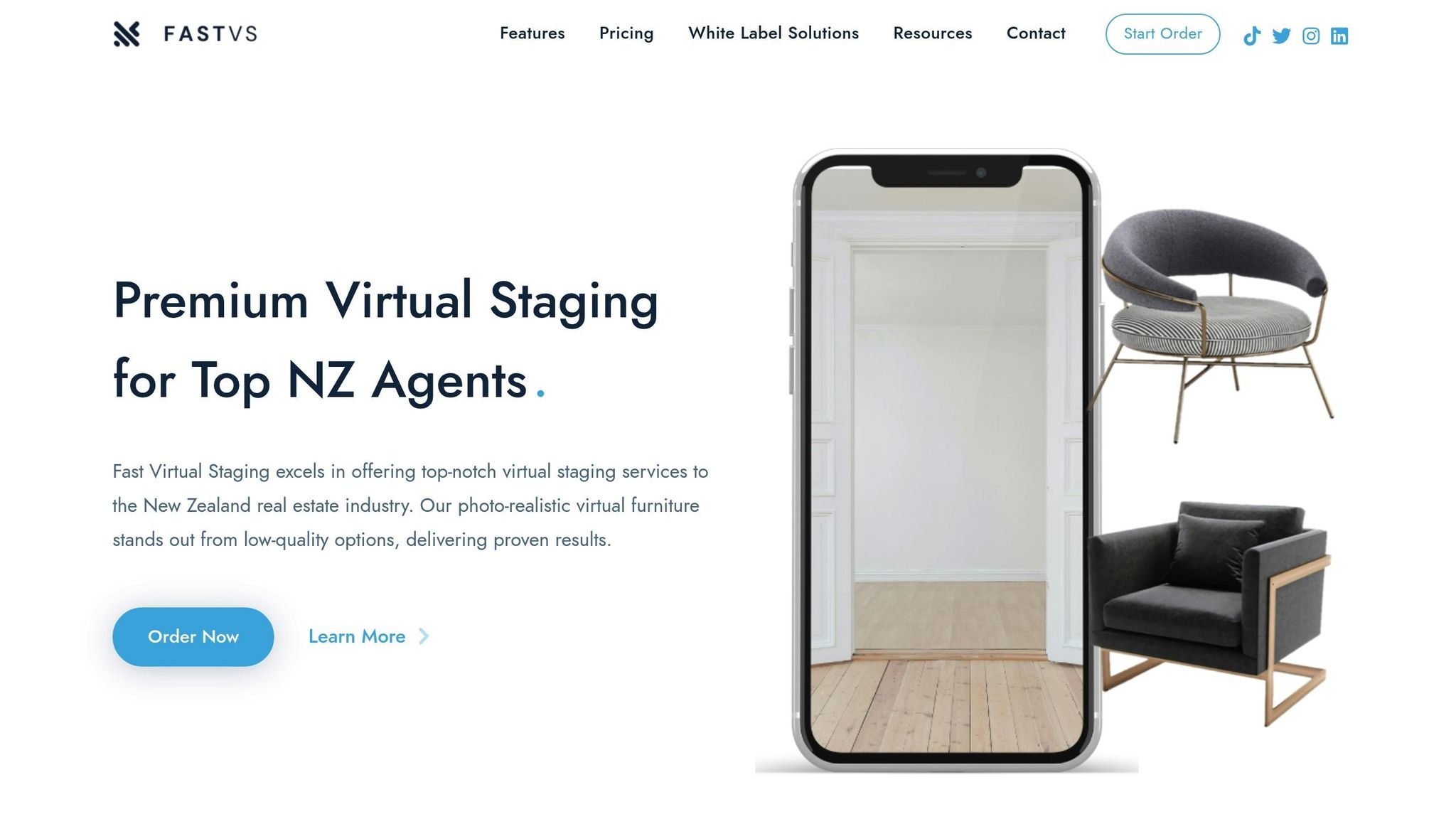
Fast Virtual Staging offers Kiwi real estate agents a quick and affordable way to elevate property listings. This platform provides photo-realistic virtual furniture renders, designed specifically to meet the demands of New Zealand’s competitive real estate market.
One standout feature is its 24-hour delivery guarantee for residential staging orders, allowing agents to list properties faster and capitalise on market opportunities. At just NZ$35 per image, the service delivers a balance of speed and quality, making it suitable for a variety of properties, from entry-level homes to high-end luxury listings.
Agents can choose from design styles like Scandinavian, French Country, and Modern to align with the property’s character and appeal to the target buyer demographic. For example, a sleek Scandinavian look might suit a contemporary Auckland apartment, while French Country styling could enhance the charm of a traditional Wellington villa.
Fast Virtual Staging also caters to commercial properties, making it a versatile option for agents. As Jack Dangerfield from Ray White shared:
"Adding virtual furniture to my property photographs always generates increased interest in my listings. I can choose my own style of furniture and turn‐around times are super‐fast for the quality."
- Jack Dangerfield, Ray White
The platform’s streamlined order submission process ensures it integrates seamlessly into an agent’s workflow, making virtual staging an easy addition to their marketing strategy.
Staging Methods: Approaches to Virtual Staging
Virtual staging can be customised to suit different properties through various methods. Some providers rely on manual editing, where professional designers carefully place virtual furniture and décor to highlight a property’s unique features. Others use AI-driven techniques to furnish spaces quickly, while a hybrid approach combines the precision of manual editing with the efficiency of AI. This flexibility allows agents to select the method that best fits the needs of each property.
Choosing Design Styles for the New Zealand Market
Selecting the right design style is crucial for appealing to New Zealand buyers. It starts with understanding local preferences and trends, which often centre around clean, functional designs that reflect the country’s love for indoor-outdoor living and natural elements.
Scandinavian design is a popular choice in cities like Auckland and Wellington, thanks to its clean lines, natural materials, and neutral tones. Modern minimalism, with its sleek furniture and uncluttered look, is another effective option, creating spaces that feel open and organised.
Biophilic design, which incorporates natural textures and greenery, has been shown to boost sale prices by up to 15%. Meanwhile, warm minimalism offers a cosy yet modern aesthetic, blending comfort with intentional simplicity.
Matching the design style to the property’s architecture and target buyer demographic is key. This approach not only enhances the home’s appeal but also helps maximise its market value.
"Furniture should feel like it belongs in the space, reinforcing both aesthetic appeal and function."
- The Look
When executed well, these design choices can strengthen buyer connections and amplify the impact of virtual staging practices.
How to Implement Virtual Staging: A Step-by-Step Guide
Virtual staging can be a game-changer for property marketing. By following these steps, you can seamlessly integrate it into your workflow and make your listings stand out in a competitive market.
Preparing Property Photos for Virtual Staging
The foundation of effective virtual staging is high-quality photography. Start by preparing the property: remove personal items, declutter spaces, and eliminate bulky furniture to create a clean, blank canvas for digital enhancements. This step ensures the focus remains on the potential of the space rather than distractions.
Lighting plays a critical role too. Maximise natural light by opening curtains and blinds, and turn on overhead and accent lighting to brighten the space. Professional photography is a must – capture key areas like the living room, kitchen, and main bedroom from flattering angles. It’s also a good idea to handle minor repairs beforehand to ensure the property looks its best.
Once you have the right photos, the next step is to collaborate with a trusted virtual staging provider.
Working with a Virtual Staging Provider
Choosing a reliable virtual staging provider is crucial. Share accurate room dimensions and any specific requirements to ensure the staged furniture and décor are proportionate and realistic. Devon Higgins from PhotoUp highlights the importance of quality:
"When done right, virtual staging can help sell a home faster and for more money. To do this, you’ll want to hire a professional real estate photographer who knows how to take high quality photos and also work with a reputable virtual staging company that produces photo-realistic images."
For example, Fast Virtual Staging offers a streamlined process with perks like a personal account manager, two free revisions, and a 24-hour delivery guarantee. Such features ensure your property is market-ready without delays, allowing you to take advantage of timely opportunities. Be clear about deadlines and revision policies to avoid misunderstandings.
Once the staging is complete, it’s essential to maintain transparency and adhere to local compliance rules.
Staying Transparent and Following Compliance Rules
In New Zealand’s real estate market, transparency is non-negotiable. Virtual staging must align with truth-in-advertising laws. Always label enhanced photos with clear disclaimers such as "Photos have been virtually staged" in the listing or directly on the images.
To build trust with potential buyers, consider displaying both the original and virtually staged versions of each photo. This approach helps manage expectations and avoids disappointment during physical viewings. Importantly, avoid adding features that don’t exist, like extra windows, fireplaces, or architectural details, as this could misrepresent the property’s actual condition.
Additionally, secure written permission from homeowners before proceeding and ensure all advertising complies with MLS and local guidelines. Such transparent practices not only enhance credibility but also contribute to faster and smoother sales.
Conclusion: Why Virtual Staging is the Future of Real Estate Marketing in New Zealand
Virtual staging has become a powerful tool for Kiwi real estate agents, offering a way to sell homes faster and at higher prices. Properties marketed with virtual staging can sell up to three times quicker and often achieve a 5–10% price premium. Even better, it costs up to 97% less than traditional staging methods, making it a cost-effective solution for maximising returns.
This technology is also reshaping how buyers explore properties. With over 90% of buyers starting their property search online, virtual staging gives agents a clear edge by creating visually compelling listings that grab attention early. It’s a strategic way to stand out in a crowded market.
Affordability is another major advantage. For as little as NZ$35 per image through services like Fast Virtual Staging, agents can elevate their marketing efforts without breaking the bank. This low cost means professional-quality presentation is now accessible to properties across all price ranges.
But it’s not just about cost and convenience. Virtual staging helps buyers form an emotional connection with a property, allowing them to picture it as their future home. In New Zealand’s competitive real estate market, this emotional pull often translates into serious buyer interest and action.
Finally, virtual staging is a forward-thinking solution for a globalised market. It caters to remote and international buyers who might not be able to attend in-person viewings. With New Zealand continuing to attract attention from overseas investors, this technology ensures properties make a strong impression, no matter where potential buyers are located.
FAQs
How does virtual staging make a property more attractive to potential buyers online?
Virtual staging turns empty or outdated spaces into inviting, fully furnished rooms, making it easier for potential buyers to picture themselves living there. By presenting a home’s possibilities with stylish, modern designs, it helps spark emotional connections and draws in more interest.
Compared to traditional staging, virtual staging is a more budget-friendly and faster option. It also offers the flexibility to customise designs, catering to the varied tastes of New Zealand’s property market – making it a smart choice for speeding up home sales.
How do I prepare a property for virtual staging, and what tips ensure the best results?
To get a property ready for virtual staging, start by decluttering and removing personal items. This helps create a neutral, welcoming space that potential buyers can imagine as their own. Make sure the property is spotless and well-lit before taking high-resolution photos. Capture each room from angles that showcase its best features.
When it comes to virtual staging, pick furniture and decor that match the property’s style and appeal to your target audience. Use professional tools to digitally add furnishings and accessories that look realistic, keeping proportions, lighting, and balance in mind. Be careful not to overcrowd the space or include elements that could mislead buyers about the property’s layout or size.
For the best outcome, work with skilled virtual staging experts, carefully review the final images, and ensure the staging reflects the property’s unique charm. Well-staged, high-quality photos can play a big role in drawing interest and helping your property sell faster.
What legal and ethical guidelines should real estate agents in New Zealand follow when using virtual staging?
In New Zealand, adhering to truth-in-advertising laws is essential when using virtual staging. This means you must avoid any misleading or deceptive content in property listings. Always be upfront by clearly stating that the images have been virtually staged, ensuring potential buyers are fully aware.
On an ethical level, honesty and openness are non-negotiable. Virtual staging should reflect the property as it is, without exaggerating or misrepresenting its features. It’s also crucial to handle any data with care, respecting privacy and maintaining professional standards. By sticking to these principles, you can use virtual staging effectively to enhance your listings while building trust with prospective buyers.